
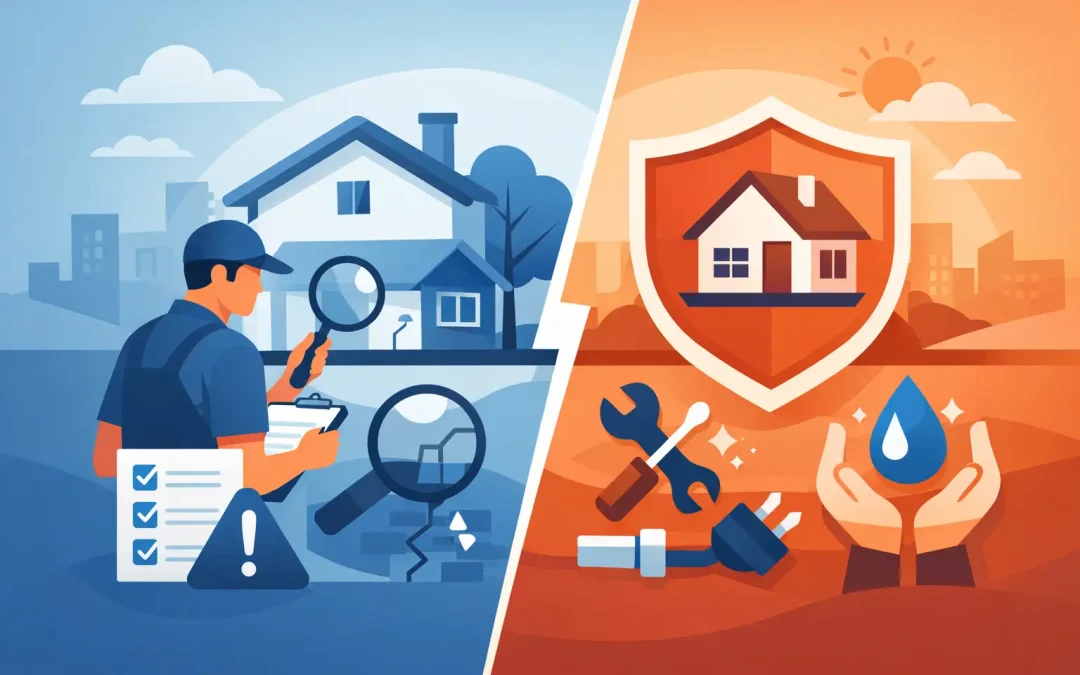
A home inspection versus home warranty comparison can feel confusing because both are tied to protecting your purchase. They do very different jobs, though. One helps you understand a home’s visible condition before you commit to closing. The other may help cover certain repair costs after closing, subject to a service contract’s limits, exclusions, and approval process.
For buyers in Las Vegas, Boulder City, Pahrump, and across Clark County, knowing the difference matters before you remove inspection contingencies, request repairs, or accept a seller-provided warranty. A warranty is not a substitute for due diligence. A detailed inspection gives you the information needed to decide whether the home, the price, and the repair responsibilities make sense for you.
What a Home Inspection Does Before Closing
A home inspection is an independent, visual evaluation of a property’s readily accessible components and systems at a specific point in time. It is typically performed during the due diligence period, when a buyer still has the opportunity to negotiate, request repairs, seek credits, or reconsider the purchase under the terms of the contract.
The purpose is not to make a house pass or fail. Homes are not graded. The purpose is to identify material defects, safety concerns, maintenance needs, and conditions that may require further evaluation or repair. A detail-oriented inspection looks beyond the bare minimum so you can see the property’s condition from foundation to finish.
A quality inspection commonly evaluates visible and accessible elements such as the roof, exterior, structure, electrical system, plumbing, heating and cooling equipment, interior, insulation, ventilation, doors, windows, and built-in appliances. The exact scope depends on the inspection agreement, the home’s condition, and what is accessible on inspection day.
In Southern Nevada, the inspection can be especially valuable for understanding issues associated with intense sun exposure, aging HVAC equipment, roof wear, drainage, stucco cracking, electrical concerns, irrigation leaks, and desert landscaping that directs water toward the structure. Not every crack or worn component is a deal breaker. The value is knowing what you are looking at before it becomes your responsibility.
A thorough digital report should explain findings in plain language and support significant concerns with photos or video. That documentation helps buyers and agents distinguish between an urgent repair, a reasonable maintenance project, and a condition worth monitoring. It also gives everyone a clearer starting point for a repair addendum or credit request.
What a Home Warranty Does After Closing
A home warranty is a service contract, not an inspection and not homeowners insurance. Depending on the plan, it may contribute to the cost of repairing or replacing certain covered systems or appliances that fail from normal wear and tear after the policy begins.
Coverage often centers on items such as heating and cooling systems, water heaters, electrical components, plumbing systems, kitchen appliances, or garage door openers. But the word “covered” deserves close attention. Every warranty company has its own contract terms, dollar caps, service fees, exclusions, maintenance requirements, waiting periods, and rules about pre-existing conditions.
For example, an HVAC system may be listed as covered, but the policy may not pay for all parts, code upgrades, improperly installed components, refrigerant issues, secondary damage, or equipment that was already failing before coverage took effect. The company may also choose the service provider and determine whether repair or replacement is appropriate under the contract.
That does not mean a warranty has no value. For a buyer with limited cash reserves after closing, a well-understood plan can provide some budget predictability when an eligible covered item breaks. It can also be useful when a seller includes a warranty as part of the transaction. The key is to view it as a limited post-closing service agreement, not a promise that every expensive repair will be handled.
Home Inspection Versus Home Warranty: The Key Difference
The simplest distinction is timing and purpose. A home inspection is information before you buy. A home warranty is potential repair coverage after you buy.
An inspection asks: What is the visible condition of this house right now, and what should I understand before closing? A warranty asks: If a listed item fails after coverage starts, does this contract provide any eligible benefit?
That difference has major implications during a real estate transaction. If an inspector identifies a deteriorated roof, an unsafe electrical condition, evidence of a plumbing leak, or an HVAC system near the end of its service life, the buyer has usable information while negotiations are still possible. You may ask the seller to repair the concern, provide a credit, reduce the price, or allow further evaluation by a qualified contractor.
Waiting for a warranty to address a known issue is risky. Many contracts exclude known, pre-existing, improperly maintained, or code-related conditions. Even when coverage applies, a service fee, coverage limit, and repair timeline may still leave the homeowner with significant out-of-pocket costs.
Why a Warranty Cannot Replace an Inspection
A warranty company does not inspect the home for you before you purchase it. It does not identify whether the roof is nearing the end of its useful life, whether drainage is moving water toward the foundation, or whether a previous repair appears incomplete. It will not organize a negotiation strategy during escrow.
More importantly, a warranty does not provide a complete condition report. Buyers need a clear record of material findings before their contractual deadlines pass. Without that information, you may accept defects that could have been addressed through negotiation.
An inspection also helps you read a warranty offer more realistically. If the report shows an older water heater, a dated electrical panel, or an air conditioner with visible concerns, you can ask better questions about the policy. Is the item included? What exclusions apply? What is the maximum payout? Does the policy exclude conditions identified before coverage begins? Those answers should influence your decision, not sales language on a brochure.
When Having Both May Make Sense
For some buyers, the right choice is an inspection plus a home warranty. This can make sense when the inspection has provided a clear picture of the home’s current condition, the transaction terms are acceptable, and the buyer understands exactly what the warranty does and does not cover.
A warranty may be more appealing for a home with older but currently functional appliances or systems, especially if the buyer wants help managing the possibility of an unexpected covered repair in the first year. It may be less useful when the policy’s exclusions closely match the home’s known concerns, when payout limits are low, or when the buyer would rather set aside the warranty premium and service-fee amount in a repair fund.
The decision is personal, but it should be informed. Compare the plan cost, service call fee, coverage caps, exclusions, cancellation terms, and contractor-selection process against the property’s actual condition and your financial cushion after closing.
Use the Inspection Report to Make Better Decisions
A report should not leave you with a stack of vague warnings and no next step. Look first at health and safety concerns, active leaks, electrical defects, roof issues, significant structural concerns, and systems that need prompt professional evaluation. Then separate those from routine maintenance and future projects.
Kelleher Home Inspections delivers photo- and video-supported digital reports within 24 hours, helping buyers understand what they are seeing and act before key transaction deadlines. HomeGauge’s Create Request List technology can also help turn relevant findings into an organized list for discussions with your real estate agent and the seller.
Be reasonable in those discussions. Sellers are not typically expected to make every older component new, and a home inspection report will often document normal wear. Focus negotiations on material defects, safety items, and conditions that were not reasonably apparent before making the offer. Your agent can help you weigh the market, contract terms, and whether a repair, credit, price adjustment, or acceptance of the condition is the strongest path forward.
Before closing, rely on facts you can document, not the assumption that a warranty will take care of whatever comes next. A careful inspection sets the bar high when it matters most: before the house becomes yours.
Recent Comments