
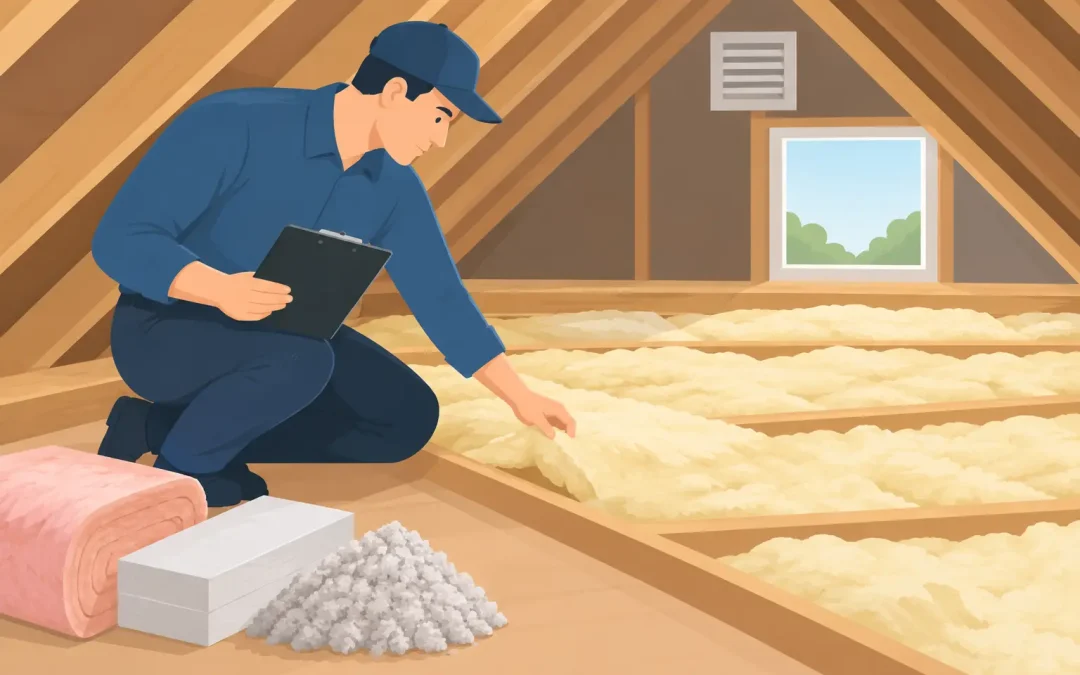
A Las Vegas home can feel perfectly comfortable during a showing and still hide a costly attic problem above the ceiling. When you know how to evaluate attic insulation, you can ask better questions before closing, identify likely comfort and energy-cost concerns, and avoid treating a rushed repair as a surprise after move-in.
Attic insulation is not just about whether there is material on the attic floor. Its performance depends on coverage, depth, air leakage, ventilation, ductwork, roof conditions, and whether prior work was installed carefully. For Clark County buyers, those details matter. Summer attic temperatures can become extreme, placing extra strain on cooling systems and exposing weak spots in a home’s thermal barrier.
Start With What You Can Safely See
During a home inspection, the attic is evaluated where access and conditions allow. A safe visual assessment begins at the access opening. Look for insulation that is visible from the hatch, along with signs of staining, damaged trim, loose weatherstripping, or an uninsulated attic door. A poorly sealed attic hatch can allow conditioned air to escape into one of the hottest spaces in the house.
Do not step into an attic unless there is a safe, supported walking surface. Ceiling drywall is not designed to carry a person’s weight, and one misplaced step can create ceiling damage or injury. Low-clearance attics, limited access, exposed wiring, and unsafe framing can also limit what an inspector can see. That is not a shortcut – it is a safety boundary that should be clearly documented in the inspection report.
From the accessible areas, look for a reasonably even blanket of insulation across the attic floor. Bare patches, compressed areas, and material pushed aside around storage platforms can all reduce performance. Insulation should generally cover the ceiling plane consistently, including areas near exterior walls that may be harder to reach.
How to Evaluate Attic Insulation by Type and Depth
Most attics contain one of three common materials: fiberglass batts, loose-fill fiberglass, or loose-fill cellulose. Fiberglass batts come in rolls or rectangular sections. They are easy to recognize, but their effectiveness drops when they are folded, compressed, cut poorly around obstructions, or missing in sections. Loose-fill insulation has a more uniform, fluffy appearance and can perform well when installed to an adequate, consistent depth.
Cellulose is commonly gray or brown and is made from treated recycled paper fibers. It can be an effective product, but it should be dry and evenly distributed. In older homes, be cautious around insulation that looks like small, shiny, pebble-like granules. Vermiculite insulation may be associated with asbestos contamination and should not be disturbed or sampled casually. A qualified professional can advise on appropriate testing or next steps.
Depth is a useful field indicator, but it is not the entire answer. A ruler or marked measuring stick can show whether loose-fill material has settled or whether batts appear thinner than their intended depth. The material’s R-value, or resistance to heat flow, depends on its type and installed thickness. In Southern Nevada, many homes benefit from substantial attic insulation, but the right target varies with the home’s age, construction, roof assembly, existing insulation, and applicable local requirements.
Avoid assuming that adding more insulation automatically solves the issue. If the existing material is wet, contaminated, heavily compacted, or concealing active electrical or roof concerns, those conditions need attention first.
Look Beyond the Insulation Itself
The best insulation cannot compensate for major air leaks. Warm outdoor air can enter the attic and conditioned indoor air can escape through openings around recessed lights, plumbing penetrations, wiring holes, duct chases, and the attic hatch. These gaps can also carry dust into the attic, leaving dark streaks or dirty insulation near leakage paths.
Air sealing often belongs ahead of an insulation upgrade. The sequence matters: seal accessible openings first, then install or restore insulation coverage. Otherwise, fresh material may make future air-sealing work more difficult and leave the underlying energy loss unresolved.
Pay close attention to recessed light fixtures. Older fixtures may not be rated for direct insulation contact, and covering them incorrectly can create an overheating concern. Chimney or flue clearances also require specific noncombustible spacing. These are not areas for a buyer or seller to fill casually with loose insulation.
Check for Moisture, Roof, and Ventilation Clues
Clark County’s dry climate does not eliminate moisture problems. A roof leak, damaged flashing, disconnected bathroom exhaust duct, or condensate issue can wet insulation and reduce its effectiveness. Look for dark staining on roof sheathing, water marks, damp or matted insulation, rusted fasteners, or an odor that suggests microbial growth.
Ventilation requires context. Many conventional attics use intake openings near the eaves and exhaust openings near the roof ridge or through roof vents to manage heat and moisture. Insulation should not block soffit vents. Properly installed baffles preserve an air channel at the roof edge while allowing insulation to reach the exterior wall line.
However, not every roof system is designed the same way. Some homes have conditioned or unvented attic assemblies, especially after renovations or roof-system changes. A buyer should not assume an attic is defective simply because it does not resemble a neighbor’s attic. The important question is whether the insulation, ventilation approach, and roof assembly work together as intended.
Do Not Overlook Ducts in the Attic
In Las Vegas-area homes, HVAC ducts often run through unconditioned attic space. That means your cooled air may travel through intense heat before it reaches a bedroom or living room. Inspect visible duct runs for disconnected sections, crushed flex duct, torn insulation jackets, poorly sealed joints, and insulation that has slipped away from the duct.
A duct problem and an insulation problem can produce similar symptoms: rooms that run hot, high utility bills, long cooling cycles, or uneven temperatures. They are different repairs. Adding attic insulation may help overall performance, but it will not correct a disconnected duct or a significant air leak at a duct connection.
Also look for bathroom fans that terminate inside the attic rather than outdoors. That setup can introduce moisture into the attic and should be corrected. Dryer vents should never discharge into the attic because of lint, moisture, and fire concerns.
Separate a Maintenance Item From a Negotiation Issue
Not every attic finding should stop a purchase or become a major seller request. A small area of thin insulation, a minor hatch air leak, or a few disturbed batts may be a manageable post-closing improvement. A home with otherwise dry, intact insulation but below-current energy expectations may be a budgeting decision rather than a defect.
More serious concerns deserve prompt attention before you finalize terms. These include evidence of active roof leakage, widespread wet insulation, suspected vermiculite, exposed or unsafe electrical conditions, damaged structural members, substantial missing insulation, or disconnected HVAC ducts. The priority depends on the finding’s safety implications, likelihood of continued damage, repair scope, and effect on the home’s use.
A detailed inspection report should provide photographs and clear descriptions of visible conditions, along with appropriate recommendations. That documentation helps you and your agent distinguish between repairs to request, projects to price, and routine maintenance to plan after closing. Kelleher Home Inspections uses photo- and video-supported reporting to help buyers turn those decisions into an organized repair conversation rather than a vague list of worries.
Questions to Ask Before You Close
If the attic condition raises concern, ask the seller for available records on roof replacement, insulation upgrades, HVAC work, water-damage repairs, and pest treatment. Receipts may clarify when work was done, but they do not replace a visible evaluation of current conditions.
For a larger concern, consider a qualified insulation contractor, roofing professional, HVAC contractor, or electrician, depending on what was found. Request a scope that identifies the cause of the issue, not just the material to add. For example, an estimate should explain whether old insulation must be removed, whether air sealing is included, how ventilation will be addressed, and whether duct repairs are separate.
The attic is easy to ignore because it is out of sight. Before you close, treat it as part of the home’s working system: a place where roof protection, cooling performance, indoor comfort, and long-term maintenance all meet. A careful evaluation now gives you a clearer path to a home that performs the way you expect after the keys are in your hand.
Recent Comments