
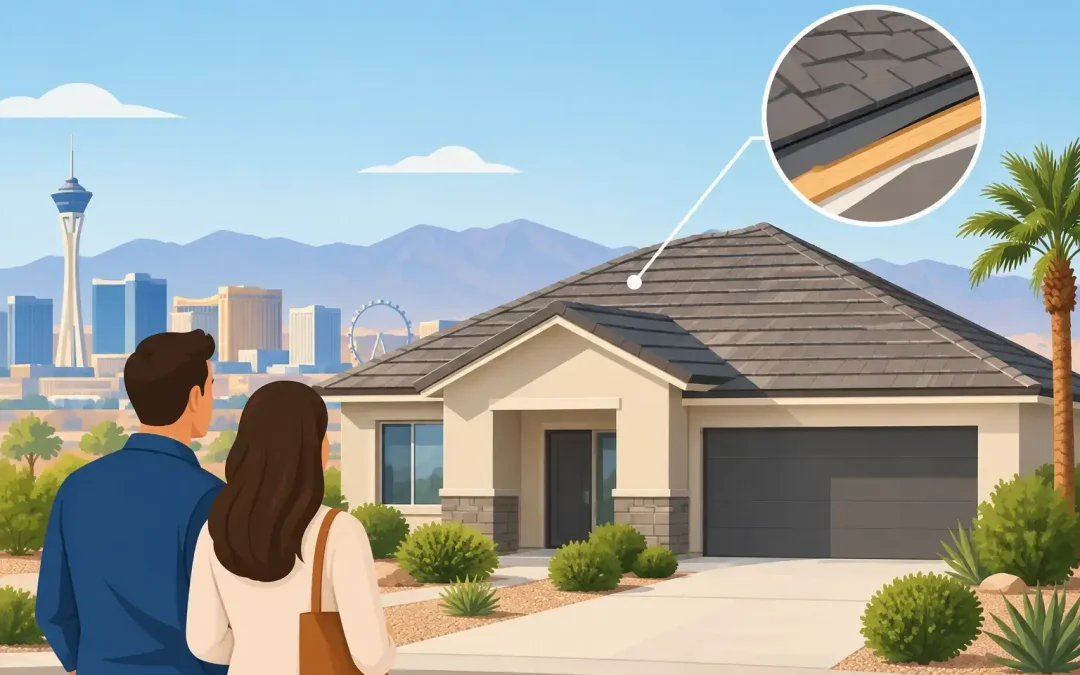
A roof can look acceptable from the street and still represent one of the largest near-term expenses in a home purchase. This roof lifespan guide is built for Las Vegas-area buyers who need to look beyond curb appeal, understand what the roof’s age and condition may mean, and make informed decisions before closing.
In Clark County, roofs face an unusually demanding combination of intense ultraviolet exposure, extreme summer heat, wind, dust, and sudden monsoon storms. Those conditions can shorten the practical service life of roofing materials, particularly when maintenance has been deferred. A home inspection cannot promise how many years a roof will last, but it can identify visible conditions that help buyers plan, negotiate, and avoid being caught off guard after move-in.
Why Roof Age Is Only Part of the Story
Sellers and listing records may identify a roof as “newer,” but that description needs context. Ask when the roof was installed, whether it was a full replacement or an overlay, who performed the work, and whether permits, invoices, or transferable warranties are available. A roof installed ten years ago with regular maintenance may be in better condition than one installed five years ago with poor flashing, damaged underlayment, or ongoing drainage issues.
The material matters, but installation quality and exposure matter just as much. South- and west-facing slopes typically absorb the harshest afternoon sun. Roof areas beneath large HVAC equipment, around vents, and at transitions between roof planes often deserve closer attention because they are common locations for wear and water entry.
For a buyer, the question is not simply, “How old is the roof?” It is, “What visible evidence supports its current condition, and what expense or maintenance should I reasonably anticipate?”
Roof Lifespan Guide: Common Materials in Southern Nevada
Published lifespan ranges are useful starting points, not guarantees. Local weather, installation methods, ventilation, maintenance history, and repairs can shift the timeline substantially.
Asphalt Shingles
Asphalt shingles are common on residential properties because they are familiar and generally less expensive to install than tile. In a milder climate, architectural shingles may last 20 to 30 years. Under Southern Nevada sun and heat, buyers should be cautious about assuming the upper end of that range.
Visible concerns can include curling edges, cracking, granule loss, brittle shingles, lifted tabs, exposed fasteners, patched areas, and deteriorated sealant around penetrations. Granules in gutters may be less obvious in a dry climate, so the roof surface itself becomes especially important. A few isolated repairs are not automatically a deal breaker, but widespread aging can indicate that replacement planning is appropriate.
Concrete or Clay Tile
Tile roofing can have a long service life, often several decades or more, but the tiles are only one part of the assembly. Underlayment beneath the tile may age long before the tile itself does. This is one of the most important distinctions for buyers considering a tile-roof home.
Cracked, slipped, or missing tiles can create routes for moisture intrusion. Broken tiles may also result from foot traffic during HVAC service or other work. Even where tiles appear intact, exposed or deteriorated underlayment at edges, valleys, penetrations, or lifted sections can signal a more significant project ahead. Replacing individual tiles and performing a full underlayment replacement are very different scopes of work and costs.
Low-Slope and Flat Roof Systems
Low-slope roof sections are often found over patios, additions, garages, or portions of Southwestern-style homes. These systems may use modified bitumen, foam, single-ply membrane, or other specialty materials. Their service life varies considerably by material and installation quality, often falling in the range of 10 to 25 years.
Standing water, open seams, cracking, blisters, patched areas, degraded coatings, and clogged drains or scuppers deserve careful evaluation. Drainage is especially important. Las Vegas does not receive frequent rainfall, but a short, heavy storm can expose a small drainage or flashing defect quickly.
Foam Roofs
Spray polyurethane foam roofs are used on some low-slope homes and can perform well when installed and coated correctly. The protective coating is central to the system’s durability. Recoating at the recommended intervals can extend service life, while neglected coatings can leave the foam vulnerable to deterioration.
Buyers should look for cracking, bare or weathered areas, ponding water, prior patching, and signs that regular recoating has been postponed. Documentation of coating maintenance can be as valuable as the stated age of the roof.
What a Home Inspection Can Tell You
A detailed pre-purchase inspection is designed to identify visible and readily accessible roofing concerns at the time of the inspection. Depending on access and safety conditions, that may include the covering material, flashing, valleys, penetrations, gutters, drainage components, visible roof structure, and evidence of moisture intrusion from accessible interior areas.
An inspector may document damaged shingles or tiles, deficient flashing, exposed fasteners, deteriorated sealants, debris buildup, apparent drainage concerns, or stains that warrant further evaluation. Photos and video help connect the written finding to the actual condition, which is particularly useful when discussing repairs with a seller or reviewing priorities with your agent.
There are limits. Inspectors do not perform destructive testing, remove roofing materials, or guarantee remaining service life. Some areas cannot be safely walked, and concealed underlayment conditions may not be visible. When conditions suggest active leakage, advanced wear, or a potentially significant repair, a qualified roofing contractor should evaluate the roof and provide a scope and cost estimate before contingency deadlines expire.
Warning Signs That Deserve Action Before Closing
A roof does not need to be actively leaking to deserve further attention. Ceiling stains, bubbling paint, or damaged drywall can point to past or current moisture entry, although the source must be confirmed. In the attic or accessible roof structure, dark staining, damp insulation, visible daylight, or rusted fasteners may also justify a closer look.
Outside, pay attention to uneven roof planes, damaged or displaced materials, loose flashing, heavy patchwork, and areas where roof coverings meet walls, chimneys, skylights, or vents. These transitions are often more vulnerable than the broad field of the roof.
Also consider the home’s maintenance history. A seller who cannot provide a roof age, repair records, or warranty information is not necessarily hiding a defect. Still, the absence of documentation increases uncertainty. Buyers should account for that uncertainty in their inspection response and post-closing budget.
Turning Findings Into a Smart Purchase Decision
Not every roof finding should become a seller demand. Minor sealant maintenance, a small number of damaged tiles, or cleaning debris from drainage components may be normal ownership items. The key is separating manageable maintenance from conditions that suggest water intrusion, safety concerns, or a major near-term capital expense.
For significant findings, request enough information to make a decision with clear eyes. That may mean a roofing contractor’s evaluation, repair records, a written estimate, or confirmation of whether a prior repair carries a warranty. Your real estate agent can help determine whether a repair request, credit, price adjustment, or acceptance of the condition makes the most sense for the transaction.
Kelleher Home Inspections documents material visible findings with a thorough digital report so buyers and agents can organize questions, priorities, and repair negotiations rather than relying on memory after a walkthrough. The goal is not to make a home seem perfect. It is to give you a defensible understanding of what you are buying.
Plan for the Roof You Will Own
A roof near the end of its expected service range is not an automatic reason to walk away from a home. It may be an acceptable purchase if the price, condition, and replacement budget align with your plans. On the other hand, an aging roof paired with visible deficiencies and no maintenance records may deserve stronger negotiation or further evaluation.
Before you remove your inspection contingency, make sure you understand the roof’s material, documented age, visible condition, likely maintenance needs, and the unanswered questions that require a roofer’s opinion. A clear answer before closing is far less expensive than an unexpected answer during the next monsoon storm.
Recent Comments