
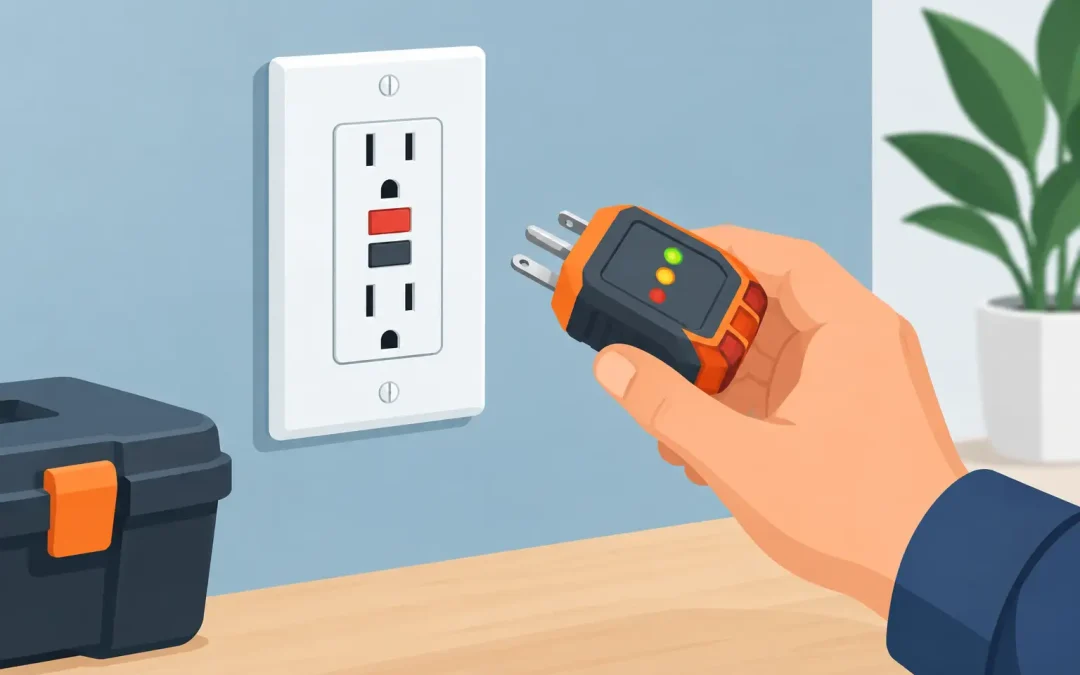
A GFCI outlet can look perfectly normal while failing to provide the protection it was installed for. That matters in a Las Vegas-area home, where outlets near bathroom sinks, kitchen counters, garages, laundry areas, and exterior spaces may be exposed to moisture or used with appliances that create a shock risk. Knowing how to test GFCI outlets gives homebuyers a useful way to spot an obvious concern before closing – but it does not replace a complete electrical evaluation during a professional home inspection.
Ground-fault circuit interrupter protection is designed to shut off power quickly when electricity takes an unintended path, including through a person. A working GFCI is one layer of protection, not a guarantee that an electrical system is safe. Still, a unit that will not trip, will not reset, or leaves other required outlets unprotected deserves attention before you finalize repair negotiations.
What a GFCI Outlet Does
A GFCI monitors the electrical current moving through a circuit. Under normal conditions, the current going out on the hot wire should closely match the current returning on the neutral wire. If the device detects a difference that can indicate current leakage, it disconnects power rapidly.
You will often find GFCI protection in locations where people are more likely to contact water, damp surfaces, or grounded materials. In a typical residence, that can include bathrooms, kitchens, garages, laundry rooms, unfinished areas, exterior receptacles, pool equipment areas, and wet-bar locations. Exact requirements depend on the home’s age, its original construction standards, renovations, and the location involved.
Not every protected receptacle will have visible TEST and RESET buttons. One GFCI device can protect additional standard-looking outlets downstream on the same circuit. A tripped outlet in a garage, for example, may be the reason an exterior receptacle or a bathroom outlet has no power.
How to Test GFCI Outlets Safely
The simplest homeowner check uses the TEST and RESET buttons built into a GFCI receptacle. Perform the test with dry hands, dry flooring, and no exposed wiring or damaged outlet cover. Never attempt a test if the receptacle is cracked, loose, hot, sparking, wet, or visibly burned. Those conditions call for a licensed electrician.
Start with something that confirms power
Plug a small lamp, phone charger, or other simple device into the GFCI outlet and confirm it has power. A plug-in receptacle tester can also be useful, but it should be treated as a screening tool rather than a complete diagnosis. Some wiring defects can produce misleading tester indications, and a tester cannot prove that every part of the circuit is properly installed.
Once you have confirmed power, press the TEST button firmly. The connected device should turn off. In most cases, the RESET button will pop outward or the outlet will otherwise indicate that it has tripped. If the outlet continues to power the device after you press TEST, the GFCI may be defective, improperly wired, or not functioning as intended.
Next, press RESET. Power should return to the receptacle. If the device will not reset, do not force it. The issue may be as simple as a tripped upstream GFCI or breaker, but it can also point to a wiring fault, a failed device, or a problem on the protected portion of the circuit.
Check nearby outlets that may be downstream
After pressing TEST, check nearby outlets in the same general area. A GFCI in the garage may protect exterior outlets. A GFCI under a kitchen sink may protect countertop outlets. Layouts vary widely, especially in older homes and homes that have been remodeled, so avoid assumptions.
If nearby outlets lose power when the GFCI trips and regain power when it resets, that indicates they are likely receiving downstream protection from that device. If an outlet that appears to be in a required location remains energized, make a note of it for further evaluation. The arrangement may be intentional or may reflect an installation concern. Only a qualified electrician can determine whether the protection is required, correctly wired, and appropriately located.
Test the circuit breaker only when appropriate
Some homes use GFCI circuit breakers in the electrical panel instead of, or in addition to, GFCI receptacles. These breakers usually have a TEST button. Homebuyers should be cautious around electrical panels. If the panel has missing cover screws, damaged components, signs of overheating, moisture intrusion, unlabeled breakers, or any exposed conductors, do not operate breakers yourself.
Even in a clean, accessible panel, testing a GFCI breaker may turn off equipment you did not expect, such as a garage refrigerator, pool equipment, irrigation controls, security devices, or a freezer. If you test one, make sure power is restored and verify that affected equipment is operating afterward.
What the Results Can Tell You
A successful button test is encouraging, but it is not a clean bill of health for the entire electrical system. It shows that the device responded during that particular test. It does not confirm the age of the device, the condition of concealed wiring, the adequacy of grounding, or whether every receptacle that should be protected actually is.
These results should be documented and evaluated:
- The TEST button does not cut power to the outlet.
- The outlet will not reset after being tripped.
- The outlet has no power and no obvious tripped breaker or upstream GFCI.
- A receptacle is loose, damaged, discolored, warm, or makes crackling sounds.
- An exterior or wet-area outlet lacks a weather-resistant cover or shows corrosion.
- Nearby outlets behave unexpectedly when the GFCI is tested.
A tripped GFCI is not automatically a major defect. It may have been tripped by a temporary overload, moisture, a faulty appliance, or a prior test. The important question is whether it resets properly and whether it trips again under normal use. Repeated tripping should not be ignored or solved by repeatedly pressing RESET. It is a signal to identify the cause.
Common GFCI Testing Mistakes
One common mistake is assuming every outlet with TEST and RESET buttons is installed correctly just because the buttons move. GFCIs can be miswired, and older devices can fail. Another is treating an open-ground reading from a plug-in tester as a simple outlet replacement. Grounding concerns can involve branch wiring, connections, panels, or older electrical systems and deserve qualified evaluation.
Homebuyers also sometimes test only the visible GFCI in a bathroom and overlook the garage, exterior, kitchen, and laundry areas. In Clark County homes, exterior outlets deserve particular attention. Intense heat, dust, sun exposure, irrigation overspray, and weathered covers can all affect outdoor electrical components over time.
Finally, do not use a GFCI test as a reason to remove outlet covers, work inside a panel, or attempt electrical repairs during a showing or final walkthrough. A home purchase already involves enough uncertainty. Electrical troubleshooting without the proper training can create a shock, fire, or property-damage hazard.
How GFCI Findings Affect a Home Purchase
During a pre-purchase inspection, GFCI concerns should be described clearly enough for a buyer and agent to act on them. A useful inspection report identifies the observed condition, explains why it matters, and includes photos or video when they help clarify the issue. From there, the buyer can request further evaluation, seek repairs, or factor the condition into the transaction.
The right next step depends on the finding. Replacing an accessible failed GFCI receptacle may be a relatively straightforward repair. Missing protection in multiple areas, recurring trips, damaged exterior components, or concerns involving the electrical panel can point to a larger project. A detail-oriented inspection helps distinguish between a routine correction and an issue that needs a licensed electrician’s full assessment before closing.
Kelleher Home Inspections sets the bar higher than the bare minimum by documenting material concerns in a clear digital report, helping buyers understand what they are seeing and organize appropriate repair requests. That gives you better information for conversations with your agent, seller, and qualified repair professionals.
A GFCI test takes only a moment, but the result can reveal a protection device that needs attention. Use it as a practical check during your walkthrough, keep safety first, and make sure electrical concerns are documented before the home becomes yours.
Recent Comments