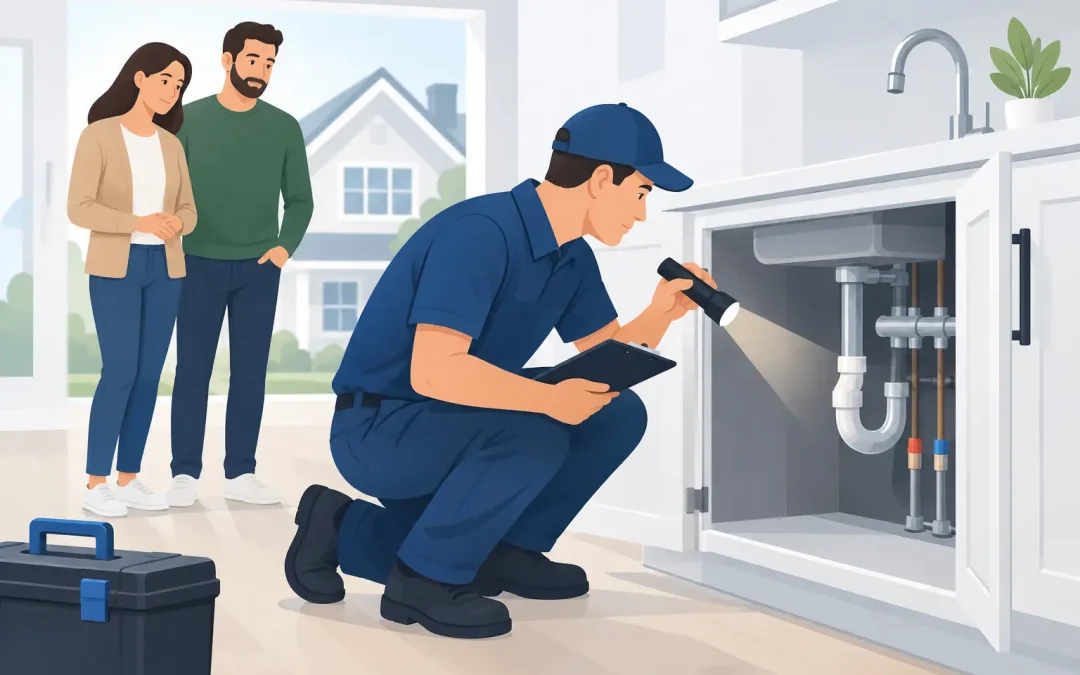
A small water stain beneath a bathroom sink can be a simple washer replacement. It can also be the visible edge of a cabinet-damaging leak, deteriorated supply lines, or a drain issue that has been ignored for years. That is why a plumbing inspection before closing matters: it gives buyers a clearer picture of a home’s water, drain, and fixture conditions while there is still time to ask questions, negotiate repairs, or plan for upcoming costs.
For buyers in Las Vegas, Boulder City, Pahrump, and throughout Clark County, plumbing deserves close attention. Desert conditions, mineral-heavy water, older supply materials, long vacancy periods, and aging water heaters can all affect a home’s plumbing performance. A detail-oriented inspection does not promise that every pipe hidden behind a wall is perfect. It does identify visible concerns, functional issues, and signs that further evaluation may be warranted before you take ownership.
What a Plumbing Inspection Before Closing Can Reveal
During a residential inspection, plumbing is evaluated as part of the home’s larger system of components. The goal is not to perform invasive testing or dismantle finished surfaces. The goal is to look beyond the bare minimum and document material visible conditions that could affect safety, function, maintenance, and repair costs.
An inspector may operate accessible faucets, tubs, showers, toilets, and drains; observe water flow and drainage; check visible supply and waste piping; inspect accessible shutoff valves; and evaluate the water heater and its visible connections. Fixtures are checked for leaks, loose components, poor drainage, and signs of prior water damage. Accessible exterior hose connections and irrigation-related components may also reveal clues about water pressure, leaks, or deferred maintenance.
The report should help you distinguish between a minor maintenance item and a concern that deserves a contractor’s estimate. A dripping faucet may be straightforward. A water heater at or beyond its expected service life, active leakage beneath a sink, corrosion at supply connections, or repeated slow drainage can carry a different level of urgency.
Water heaters deserve a closer look
A water heater is one of the more expensive plumbing-related components a buyer may need to replace shortly after moving in. Its age, visible condition, installation details, drain pan, pressure relief valve discharge piping, and signs of leakage all matter.
In Southern Nevada, hard water can contribute to sediment buildup and shorten equipment life when maintenance is neglected. An inspection may reveal rust, corrosion, improper discharge piping, missing safety features, or an older unit that should be budgeted for. It cannot predict the exact day a water heater will fail, but it can help prevent that possibility from becoming a surprise after closing.
Drains and toilets can show early warning signs
Slow drains are not always caused by a simple clog. They can result from buildup, inadequate venting, aging drain lines, or a developing blockage farther down the line. Toilets that move at the base, run continuously, flush poorly, or show staining around the floor can also require further attention.
One slow sink drain may be a manageable maintenance item. Multiple slow fixtures, gurgling sounds, sewage odors, or recurring backups are more concerning because they may point to a larger drainage or sewer-line issue. The inspection report gives you documented observations, but a sewer scope by a qualified plumbing specialist may be the right next step when symptoms, age, or property history support it.
Why Plumbing Concerns Matter During Escrow
The value of an inspection is not just finding defects. It is finding them at the point when you still have options. Before closing, buyers can discuss repair requests with their real estate agent, seek specialist evaluations, ask for seller documentation, negotiate a credit, or decide whether the condition changes the terms they are comfortable accepting.
Not every finding should become a seller request. Homes, especially resale homes, will have normal wear and routine maintenance needs. A buyer who requests every small defect can lose focus on the issues that truly affect function, safety, or near-term expense. The stronger approach is to understand the condition, prioritize it, and make decisions based on reliable documentation.
This is where a photo- and video-supported digital report is useful. Rather than relying on memory after a walkthrough, you can review the visible condition, read a clear explanation, and discuss the findings with your agent. Kelleher Home Inspections also uses HomeGauge’s Create Request List™ technology to help organize selected findings into a practical repair or project list for the transaction.
Plumbing Issues Commonly Found in Nevada Homes
Every property is different, and a newer home is not automatically free of plumbing concerns. Construction defects, poor installations, and neglected maintenance can appear at any age. Still, several conditions commonly deserve attention in Clark County homes.
Hard water is one. Mineral deposits can build up on fixtures, restrict aerators, affect water-heater performance, and leave visible scaling. Water softeners and filtration systems should be evaluated carefully as well. Their presence does not guarantee proper operation, and buyers should understand which equipment is owned, leased, maintained, or excluded from the sale.
Corroded or aging supply lines are another concern, particularly at water heaters, under sinks, and at washing machine connections. Even a small amount of corrosion can signal a future leak risk. Water stains, swollen cabinetry, damaged drywall, and musty odors may indicate that a leak has occurred before, even when the area is dry on inspection day.
Outdoor plumbing should not be overlooked. Hose bibs, visible irrigation components, and drainage around the property can affect both water use and the home’s foundation or exterior finishes. In a desert climate, an irrigation leak may go unnoticed when it is concealed by landscaping or when a home has been vacant.
What a Standard Home Inspection Cannot Do
A thorough inspection sets the bar high, but it also has reasonable limits. Inspectors generally do not open walls, move furniture or stored belongings, excavate underground piping, disassemble fixtures, or perform destructive testing. If water is shut off, utilities are unavailable, or access is blocked, some components cannot be fully evaluated.
A standard inspection also is not the same as a sewer camera inspection, a leak-detection service, or a plumbing code certification. Those services may be appropriate when there are warning signs, when the home is older, when a property has a history of sewer repairs, or when the inspection identifies conditions that need a licensed plumber’s opinion.
That is not a gap in service. It is the appropriate handoff from a broad, independent property inspection to a focused specialist evaluation. Knowing when to recommend that next step is part of protecting the buyer.
How Buyers Should Use Plumbing Findings
After receiving your report, review plumbing findings with an eye toward timing and consequence. Active leaks, safety-related water-heater concerns, evidence of damage, and drainage problems usually deserve prompt attention. Aging fixtures, minor drips, and older but functioning equipment may be better treated as future maintenance or budget items.
Ask targeted questions when a plumber evaluates a concern. What is causing the condition? Is repair sufficient, or is replacement more sensible? Is there hidden damage to investigate? What work is urgent before move-in, and what can be planned over the next year? Written estimates can make repair negotiations more specific and more productive.
It also helps to keep perspective. A house with a few plumbing maintenance items is not necessarily a bad purchase. The concern is buying without knowing which issues are minor, which are costly, and which could interrupt life in the home shortly after you receive the keys.
Before your inspection period ends, make sure plumbing findings are not lost among cosmetic details. A careful review now can protect your budget, support a clearer negotiation, and let you move toward closing with a better understanding of the home you are buying.
Recent Comments