
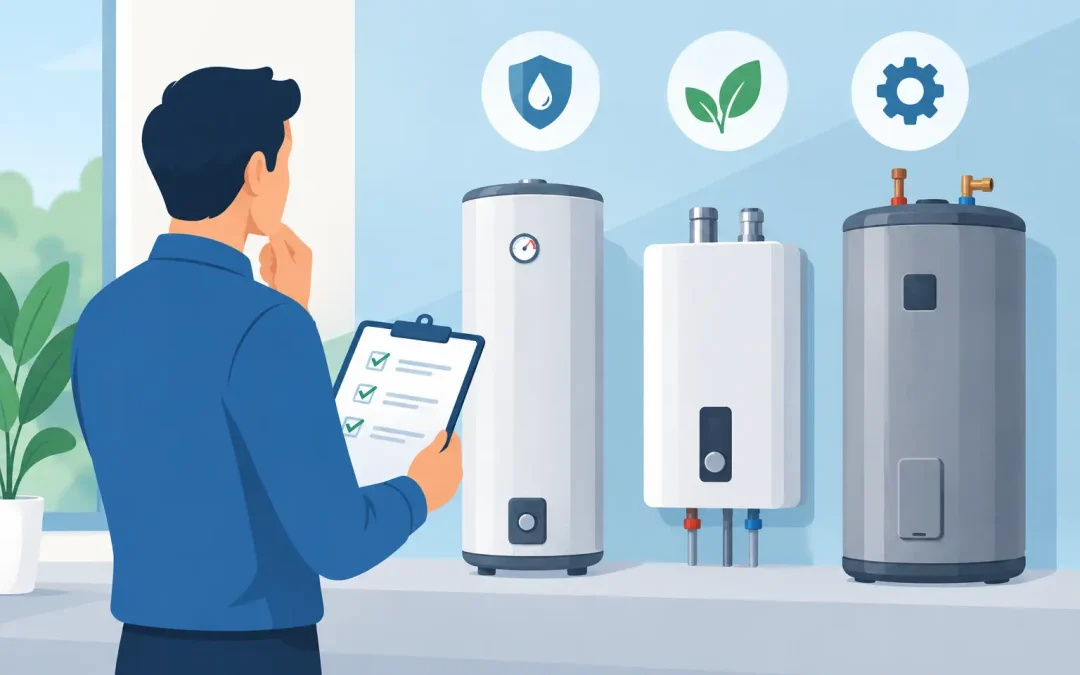
A water heater may sit quietly in a garage, closet, or utility room, but a failure can quickly become a costly disruption. A leaking tank can damage finishes, a missing safety component can create a hazard, and an undersized unit can leave a household without enough hot water. Knowing how to evaluate water heaters before the close of escrow helps buyers separate a manageable maintenance item from a system that deserves attention in negotiations.
For Clark County buyers, the details matter. Las Vegas-area homes often place water heaters in garages, exterior closets, or tight utility spaces where heat, hard water, and limited access can affect condition and service life. A careful evaluation looks beyond whether hot water is available on inspection day.
Start With the Water Heater’s Age and Type
The manufacturing date is one of the first details to identify. Most tank-style water heaters have a service life of roughly eight to 12 years, though maintenance, water quality, installation conditions, and usage can shorten or extend that range. A unit nearing or past its typical service life is not automatically defective, but buyers should budget for replacement rather than assume it will last for years.
Look for the manufacturer label on the tank. It usually lists the brand, model, serial number, fuel source, tank capacity, and energy information. Serial-number date formats vary by manufacturer, so an experienced inspector may use the label and manufacturer conventions to determine the approximate age.
The type of water heater changes what should be evaluated:
- Gas tank water heaters use a burner and venting system to heat stored water.
- Electric tank water heaters use heating elements and require correct electrical connections and overcurrent protection.
- Tankless water heaters heat water on demand and need adequate gas or electrical capacity, proper venting where applicable, and regular descaling.
- Heat pump water heaters use electricity and ambient air, requiring appropriate space, drainage, and installation conditions.
A newer unit is generally a positive sign, but age alone does not prove quality. A recently installed heater with improper venting, no drain pan, or unsafe discharge piping can still create a repair concern.
How to Evaluate Water Heaters for Visible Condition
Begin with the tank and the area around it. Rust, corrosion, active moisture, mineral deposits, or staining at the base of the tank can point to leakage. Moisture around pipe connections may be a minor fitting issue, but corrosion at the tank body itself often indicates the tank is failing from the inside out. Tank leaks are not typically repaired in a lasting way. Replacement is usually the practical path.
Hard water is common in Southern Nevada, and mineral buildup can affect valves, fittings, and appliance performance. White or greenish deposits around plumbing connections may indicate a slow leak. A heavily corroded shutoff valve may still operate today but can become difficult to use when a repair is needed.
Also consider the installation location. A garage-installed water heater should be protected from vehicle impact when required by local conditions and installation standards. Exterior installations need weather-appropriate protection. A unit tucked into a closet must still have the clearance, combustion air, and service access appropriate for its design.
A water heater should not be treated as an isolated appliance. Water staining on nearby drywall, flooring, cabinetry, or framing may reveal prior or ongoing leakage. The surrounding area can tell a more complete story than the tank label alone.
Check the Safety Components That Protect the Home
The temperature and pressure relief valve, commonly called the TPR valve, is one of the most important safety components on a tank-style water heater. It is designed to release water if excessive temperature or pressure develops inside the tank. The valve should have a proper discharge pipe that terminates in an appropriate visible location, generally near the floor and in a manner that reduces the risk of scalding or property damage.
Common concerns include a missing discharge pipe, a pipe that is capped or plugged, a pipe that is too small, or a discharge pipe that terminates where released water could cause injury or damage. Never operate or test a TPR valve casually as a buyer. Older valves can leak after being opened, and this component should be evaluated by a qualified professional when concerns are present.
For gas units, visible safety and installation items include the gas shutoff valve, sediment trap where applicable, burner compartment condition, and vent connector. The venting should be securely connected, properly supported, and routed to exhaust combustion gases outdoors. Loose joints, corrosion, improper slopes, or combustible materials too close to the vent deserve further evaluation.
Gas water heaters in garages may also require elevation or ignition-source protection depending on the unit type, installation date, and applicable requirements. Standards have changed over time, so the right question is not simply whether an older installation looks like a new one. The question is whether a visible condition presents a current safety concern or signals an improper installation.
Electric units require a different focus. Inspectors look for secure electrical connections, appropriate conduit or cable protection, and evidence of overheating or moisture at the electrical access panel. Electrical repairs should be handled by a qualified electrician or plumber with the right scope of work.
Consider Capacity, Recovery, and Household Needs
A water heater can be in acceptable physical condition yet still be a poor fit for the household. Tank capacity is measured in gallons, while recovery rate describes how quickly a tank can heat a new supply of water. A 40-gallon tank may work for a smaller household with staggered use, while a larger family with multiple showers, a large soaking tub, and simultaneous appliance use may need more capacity.
Tankless systems are rated by flow rate and temperature rise. In Las Vegas, incoming water temperatures and usage patterns can affect real-world performance. A unit that handles one shower well may not keep up with two showers, a dishwasher, and laundry at the same time.
Buyers should consider the number of occupants, bathrooms, fixture types, laundry habits, and whether the home has features that increase hot-water demand. This is a planning question, not necessarily a defect. Still, learning that the existing unit may not meet your needs before closing is far better than learning it during the first busy morning in the home.
Look for Maintenance Clues, Not Just Defects
Water heaters need periodic attention. Tank units may benefit from sediment management, inspection of the anode rod, and checks of safety components. Tankless units often need scheduled descaling, especially in areas with hard water. A lack of maintenance records does not prove neglect, but it should make buyers more cautious about remaining service life and future performance.
Ask the seller for installation permits, invoices, warranty documents, and service records when they are available. These records can clarify the unit’s age, whether replacement was professionally completed, and what maintenance has been performed. They are especially useful when a water heater appears newer than surrounding plumbing but no installation history is provided.
Pay attention to signs of recurring issues: patched drywall below a second-floor water heater, a heavily stained drain pan, repeated mineral deposits, or an appliance that produces discolored or rusty hot water. These clues may call for further evaluation of plumbing, drainage, or the water heater itself.
Decide What Belongs in Your Repair Negotiations
Not every water-heater finding should be treated the same way. A clearly unsafe condition, active leak, improper gas venting, or missing relief-valve discharge piping may warrant correction before closing or a credit that reflects qualified repair costs. A unit at the end of its expected life but operating normally may be better handled as a budget item, depending on the home’s price, the market, and your risk tolerance.
A detailed inspection report gives buyers and agents a stronger starting point than a vague request to “fix the water heater.” Photos, location details, and clear descriptions help organize the issue. With an itemized digital request list, buyers can identify material findings, prioritize them, and communicate repair requests without losing track of other inspection concerns.
Kelleher Home Inspections approaches water-heater evaluation as part of a larger effort to protect buyers from the bare minimum. The goal is not to predict the exact day an appliance will fail. It is to document visible conditions, explain what they mean, and give you practical information for the decisions ahead.
Before you remove contingencies, ask yourself one useful question: if this water heater failed during your first month of ownership, would you be surprised, financially prepared, or neither? A clear answer can help you negotiate wisely and move forward with confidence.
Recent Comments