
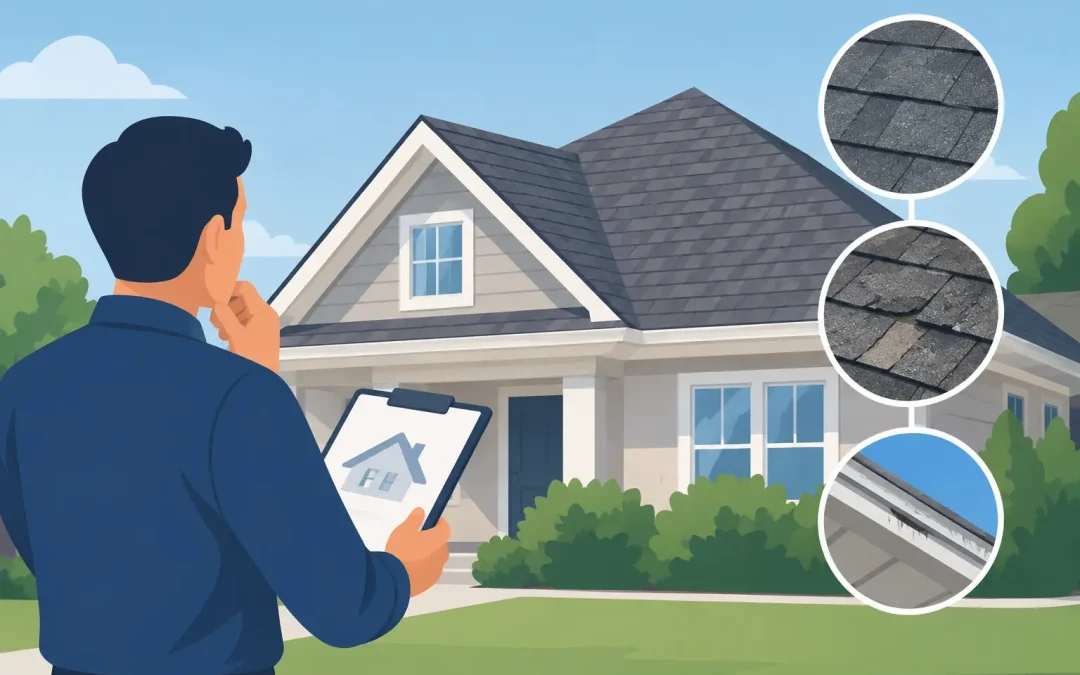
A roof can look acceptable from the street and still be close to the end of its service life. In Southern Nevada, intense UV exposure, heat, wind, and sudden monsoon storms can shorten the life of roofing materials that might perform longer in a milder climate. Knowing how to assess roof age before closing helps you avoid treating a major future expense as a small cosmetic detail.
For a buyer, the goal is not to guess the roof’s exact birthday from the driveway. The goal is to identify the likely age range, understand its present condition, and determine whether replacement, repair, or further evaluation should affect your purchase decision and negotiations.
Start With the Most Reliable Evidence: Records
The best evidence of roof age is documentation. Ask the seller for the original roofing contract, paid invoices, permit records, transferable warranty information, and receipts for recent repairs. A complete replacement invoice should identify the installation date, roofing material, manufacturer, and scope of work.
Do not assume a newer-looking roof means it was fully replaced. Sellers may use phrases such as “new roof” to describe partial reroofing, a new coating, replacement tiles, or repairs after a leak. Those can be valuable improvements, but they are not the same as a complete replacement of the roofing system.
In Clark County, permit history can also offer useful context. A permit may show when major roofing work occurred, though it does not always tell the full story. Confirm whether the work covered the entire roof and whether it included related components such as underlayment, flashings, vents, and damaged sheathing.
If records are unavailable, that does not automatically mean the roof is failing. It does mean the age estimate should be treated with more caution. An undocumented roof creates uncertainty, and uncertainty should be accounted for in your maintenance budget and negotiations.
How to Assess Roof Age by Roofing Material
Material type establishes a reasonable starting point, but expected service life is a range, not a guarantee. Installation quality, ventilation, maintenance, storm exposure, and the desert climate all matter.
Asphalt shingles commonly last about 15 to 30 years, depending on product quality and conditions. In the Las Vegas area, prolonged sun exposure may cause shingles to become brittle, curl, lose protective granules, or crack sooner than a buyer expects.
Concrete or clay tile roofs are common in Southern Nevada and can remain in place for decades. However, a tile roof is not simply a “50-year roof.” The tiles may outlast the underlayment beneath them. Underlayment, flashings, and penetrations often become the practical drivers of repair or replacement decisions, even when the tile itself still appears serviceable.
Flat and low-slope roofing systems require a different evaluation. Modified bitumen, built-up roofing, foam, and coated systems have varying lifespans and maintenance needs. A fresh coating may protect and extend the system’s service life, but it does not necessarily mean the roof underneath is new. Ask when the coating was applied and whether the underlying roof was repaired or replaced first.
Metal roofing can have a long service life, but age still matters at fasteners, seams, flashing details, and areas where dissimilar materials meet. Surface fading alone may be cosmetic, while corrosion, loose panels, or failed sealant at penetrations can point to more meaningful concerns.
Read the Condition, Not Just the Calendar
A roof installed 12 years ago may have years of life remaining. Another roof of the same age may be near replacement because of poor installation, deferred maintenance, or repeated heat damage. This is why condition must be assessed alongside age.
From a safe, visible vantage point, look for uneven roof planes, missing or damaged materials, slipped tiles, exposed fasteners, cracked sealant, deteriorated flashing, and debris collecting in valleys or drainage paths. On shingle roofs, look for curling edges, widespread cracking, bald areas, and granule loss. On tile roofs, watch for broken tiles, displaced pieces, mortar deterioration where applicable, and damaged metal at edges and penetrations.
Inside the home, inspect ceilings, upper walls, attic areas when accessible, and around skylights for water staining, active moisture, mold-like growth, or previous patching. A lack of stains does not prove the roof is perfect. It may simply mean leaks have not yet reached an interior finish, occurred only during wind-driven rain, or were repaired before the home was listed.
Pay attention to the roof’s details. Flashing around chimneys, skylights, plumbing vents, HVAC equipment, and wall intersections is often more vulnerable than the broad field of the roof. A roof can have materials that appear sound while a poorly sealed penetration creates a leak risk.
Separate a Roof Inspection From a Roof Certification
A home inspection provides a valuable visible assessment of the roof’s accessible components and current condition. It can identify material types, visible defects, signs of aging, installation concerns, and evidence that further review is needed. It should give a buyer clear documentation and practical context before the inspection contingency period ends.
However, a standard home inspection is not a warranty, leak guarantee, or prediction of the exact remaining years of roof life. Inspectors do not remove materials, perform destructive testing, or recreate a monsoon storm. Limited access, steep slopes, fragile tile, solar panels, rooftop equipment, and safety conditions can also affect what can be observed.
When a roof appears near the end of its expected life, shows active concerns, or has unclear repair history, a qualified roofing contractor may be the right next step. Request a written evaluation that separates immediate repairs from recommended maintenance and full replacement. Ask whether the estimate includes removal of existing materials, underlayment, flashing, permits, disposal, and any needed wood repairs. A low initial quote can leave out items that materially change the total cost.
Use Age Information During Negotiations
Roof age does not automatically justify asking a seller to replace the roof. The right approach depends on its condition, remaining service life, documented defects, loan requirements, insurance considerations, and the overall strength of the transaction.
A roof that is older but performing adequately may call for a buyer credit or a realistic reserve fund rather than a last-minute replacement demand. A roof with active leaks, failed materials, or safety concerns may support a stronger repair request. If a seller agrees to repairs, make sure the scope is specific. “Repair roof as needed” is vague. A clearer request identifies the defective area, calls for a qualified contractor where appropriate, and requires documentation before closing.
Buyers should also consider insurance early. Some carriers may scrutinize roof age or require additional information for older roofs, even if no visible leak is present. Contact your insurance provider during due diligence rather than discovering a coverage issue just before closing.
Kelleher Home Inspections documents material visible concerns with photos and clear explanations so buyers and their agents can distinguish between a maintenance item, a repair concern, and a major budget consideration. A detailed report also makes it easier to organize findings into a focused repair or project request list instead of negotiating from memory.
Questions Worth Asking Before You Close
When roof age is uncertain, ask the seller when the roof was last fully replaced, who performed the work, whether permits were pulled, and whether any leaks or repairs have occurred. Ask whether there are warranties and whether they transfer to a new owner. If the home has tile, ask specifically about the age and replacement history of the underlayment.
Also ask about solar installations, satellite equipment, and recent HVAC work. These projects create roof penetrations or require work near roofing materials. They are not automatically problems, but they make quality of flashing and sealing more relevant.
A buyer who understands roof age is in a better position to make a clear decision. You may proceed confidently with a sound roof, request targeted repairs, budget for a future replacement, or seek a roofing specialist’s opinion before your contingency period ends. The value is not in forcing certainty where none exists. It is in replacing assumptions with documented facts and a plan that protects your investment after the keys change hands.
Recent Comments