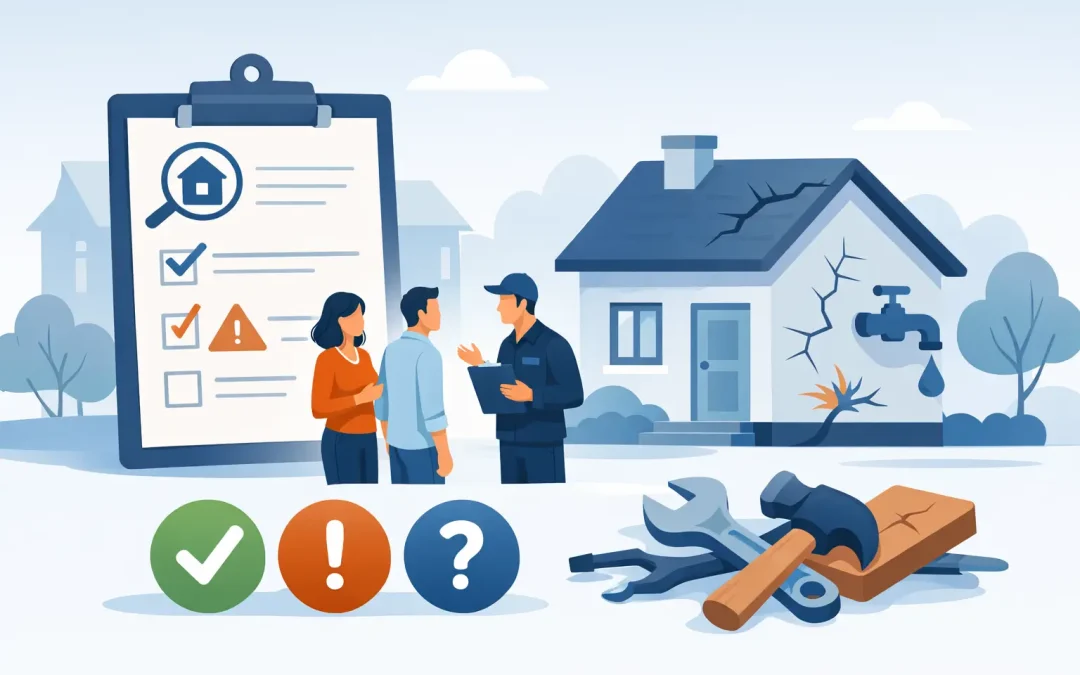
A home inspection report can feel like a long list of problems standing between you and closing. That is not what it is. Its purpose is to help you prioritize inspection repairs based on risk, cost, and the practical reality of owning the home after the keys change hands. The cracked outlet cover and the aging water heater may both appear in the report, but they do not deserve the same response.
For buyers in Las Vegas, Boulder City, Pahrump, and throughout Clark County, a clear repair strategy matters. Desert heat puts real demands on cooling systems, roofs, electrical components, irrigation, and exterior materials. The goal is not to turn a resale home into a brand-new home. It is to identify the conditions that affect safety, habitability, major expense, or the property’s ability to perform as expected.
Start With What Can Harm People or Property
Safety-related findings belong at the top of the list. These are not negotiating extras. They are conditions that may expose occupants to injury, fire, carbon monoxide, electrical shock, or water damage.
Examples can include exposed electrical wiring, missing or improperly installed safety devices, active gas leaks, unsafe stairs or handrails, damaged electrical panels, significant plumbing leaks, or a furnace with a potential carbon monoxide concern. A report may also identify signs of moisture intrusion near electrical equipment or an appliance installation that does not meet basic safety expectations.
Some safety findings are inexpensive to correct, while others require a licensed specialist. Cost alone should not determine priority. A missing smoke alarm may be a quick fix, but it still deserves immediate attention. On the other hand, an older but operating appliance may be worth monitoring rather than demanding replacement.
When a finding could create an immediate hazard, ask for a qualified contractor to evaluate and repair it before closing whenever possible. If the seller cannot complete the work, your real estate agent can help you consider alternatives, such as a credit, a price adjustment, or an escrow holdback where permitted. The right option depends on the transaction, lender requirements, and your comfort with taking on the repair after closing.
Prioritize Inspection Repairs That Protect Major Systems
After urgent safety items, focus on conditions that could lead to a substantial, near-term expense. These are the findings most likely to affect your budget in the first months or years of ownership.
In Southern Nevada, the air-conditioning system often belongs in this category. An AC unit nearing the end of its typical service life is not automatically a seller repair issue if it is cooling properly. But an inoperative unit, a system with documented deficiencies, or one showing evidence of leakage, damaged components, or poor performance deserves closer attention. A licensed HVAC contractor can provide a more precise diagnosis and estimate than a general home inspection alone.
Roofing is another high-priority area. Roof coverings naturally age under intense sun exposure, and a report may note worn materials, damaged tiles, deteriorated flashing, exposed underlayment, or evidence of past leakage. The key distinction is between normal age and active failure. A roof with a few years of remaining life may call for budgeting. A roof that is leaking, has widespread damage, or needs major repair before the next storm is a transaction issue.
Plumbing, electrical, and water-management concerns can also become expensive quickly. A slow drain may need routine service. A main sewer line concern, a leaking supply line inside a wall, an outdated electrical panel with known safety issues, or poor drainage directing water toward the foundation requires a more serious conversation. Water tends to make small defects expensive when they are left alone.
Separate Defects From Maintenance and Projects
A thorough report documents more than deal-breaking issues. It can also identify maintenance items, deferred upkeep, and improvement opportunities. Keeping those categories separate prevents a reasonable repair request from becoming an unfocused wish list.
Maintenance includes work a homeowner should expect to perform as part of normal ownership. Replacing air filters, sealing minor exterior gaps, servicing a water heater, cleaning debris from drainage areas, adjusting a sticking door, or replacing worn weatherstripping are common examples. These items matter, but they are not always appropriate to request from a seller.
Projects are different. You may want new flooring, updated fixtures, fresh paint, a remodeled kitchen, or landscaping changes. Those choices can improve your enjoyment of the home, but they are generally not inspection repairs. Asking the seller to fund cosmetic upgrades can weaken your position when you need them to address legitimate defects.
The strongest request list stays focused on material conditions. It makes clear that you understand the difference between a used home showing ordinary wear and a home with a significant problem that should be repaired, evaluated, or financially addressed.
Use Age and Condition Together
Buyers sometimes see an old component in an inspection report and assume it must be replaced. Age is useful context, but condition and performance matter more.
A 15-year-old water heater that operates without leakage may be approaching the end of its expected lifespan, yet it may not require replacement before closing. You should plan for its eventual cost. By contrast, a newer water heater with corrosion, active leakage, or an improper installation may need prompt correction.
The same principle applies to roofs, HVAC equipment, windows, and appliances. An inspector can document visible conditions and explain why they matter, but a specialized evaluation may be appropriate when a system shows a material concern. Requesting further evaluation is often a practical path when the scope or cost cannot be determined during a visual inspection.
This approach also protects you from accepting vague assurances. “It is old but works” may be true, but it does not answer whether the system is safe, properly installed, or likely to require a major repair soon. Documentation from a qualified contractor can give you the information needed to negotiate intelligently.
Build a Focused Request List
A digital inspection report with photos and video makes it easier to move from concern to action. Review the report carefully, then sort findings into three working groups: repair before closing, obtain further evaluation, and budget for after closing.
Your repair-before-closing group should be relatively short. Include safety hazards, active leaks, major system defects, conditions that could cause ongoing damage, and code-related safety issues where repair is warranted. For each item, reference the report finding and request a specific outcome, such as repair by a qualified licensed contractor, rather than dictating an unproven repair method.
Further-evaluation items should identify the system and the reason for the evaluation. For example, request a licensed HVAC contractor’s assessment of an underperforming cooling system or a qualified roofer’s evaluation of visible roof deterioration. This keeps the request fact-based and gives both parties a path toward a verified solution.
The after-closing budget group is for routine maintenance, aging components that are functioning, and improvements you choose to make. These notes are still valuable. They help you plan your first year of homeownership without turning every observation into a closing dispute.
Kelleher Home Inspections provides photo- and video-supported reports and a digital request-list tool so buyers and agents can organize these conversations without losing sight of the findings that matter most.
Consider the Cost of Delay, Not Just the Repair Price
The cheapest repair is not always the lowest priority, and the most expensive one is not always the seller’s responsibility. Ask what happens if the issue waits six months. A minor exterior sealant gap may be inexpensive today but could allow water intrusion if ignored. A worn but functional garbage disposal may be annoying, yet it is unlikely to threaten the property.
Also consider your cash position after closing. If you are using most of your available funds for down payment, closing costs, and moving expenses, an imminent HVAC replacement or roof repair has more weight than it might for a buyer with a large reserve. Investors may make a different calculation than first-time buyers planning to live in the home for years.
Your agent can help frame the request within the market and contract timeline, but the final decision is yours. An inspection gives you leverage through information. It does not require you to ask for every item, nor does it require you to accept conditions that do not fit your risk tolerance.
Keep the Negotiation Clear and Documented
When a seller agrees to repairs, request documentation. Receipts, invoices, contractor reports, warranties, and permits when applicable help confirm what was done. Verbal promises are difficult to verify after closing.
For major work, a reinspection or final walkthrough should confirm that the agreed repair appears complete and that no new visible issues were created during the work. A repaired condition is better than an unanswered question, but only when the work is properly completed.
A well-prioritized inspection response is not about finding reasons to walk away from every home. It is about refusing to settle for the bare minimum when safety, major systems, and your financial future are involved. Before you finalize closing terms, use the report to ask the right questions, protect your budget, and move forward only when the home’s condition makes sense for you.
Recent Comments