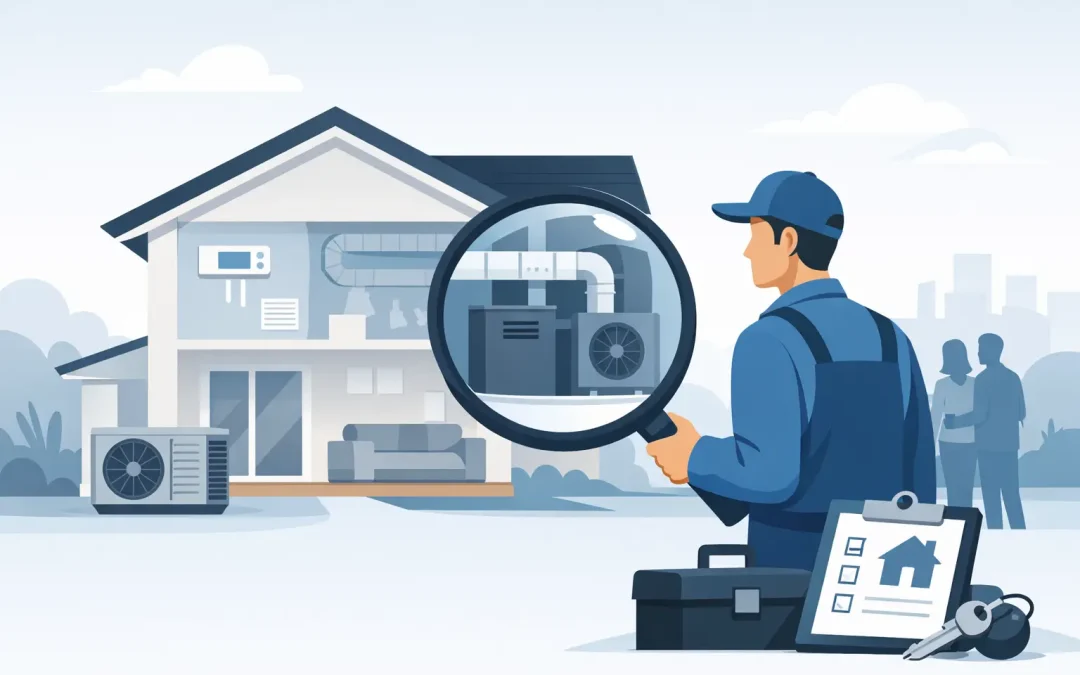
A home can look move-in ready at a showing and still have an air-conditioning system near the end of its useful life. In Las Vegas, where summer heat places real demands on cooling equipment, an HVAC inspection before closing is not a minor box to check. It is a practical way to understand whether the system that keeps the home livable is operating safely, performing as expected, and likely to need significant attention soon after you receive the keys.
For buyers, HVAC concerns can quickly become transaction concerns. A repair may be manageable. A failed compressor, aging furnace, damaged ductwork, or improperly installed condensate drain can change the true cost of the home. The goal is not to expect a flawless system. It is to have clear, documented information before your inspection contingency and repair negotiations are behind you.
What an HVAC Inspection Before Closing Can Reveal
A residential home inspection evaluates the visible, accessible condition and operation of the heating and cooling system at the time of the inspection. The inspector checks equipment that can be safely operated under appropriate conditions, observes installation details, and looks for material defects or signs that further evaluation is warranted.
That process can reveal more than whether cool air comes from a vent. A system may turn on and still show concerns that deserve attention, such as excessive temperature differences, unusual noises, corrosion, damaged insulation on refrigerant lines, missing disconnects, improper clearances, water staining around equipment, or a condensate line that does not appear to drain properly.
In Southern Nevada, age and maintenance history matter. Air conditioners work hard for long stretches of the year, and a unit that is merely functioning on inspection day may still be approaching a costly replacement decision. The inspection report can identify the approximate age of accessible equipment, visible wear, and conditions that support a more focused HVAC evaluation.
A home inspector does not perform the same work as a licensed HVAC contractor. Inspectors do not dismantle equipment, test refrigerant pressures, or guarantee future performance. That distinction protects buyers from false certainty. When visible conditions point to a possible defect or an end-of-life concern, the right next step is often a qualified HVAC technician who can diagnose the system in greater depth and provide repair or replacement estimates.
Why HVAC Issues Carry Extra Weight in Las Vegas Homes
A weak air conditioner is inconvenient in many places. In Las Vegas, Boulder City, and Pahrump, it can become an immediate health, comfort, and budget issue. A buyer who closes during mild weather may not discover marginal cooling performance until the first serious heat wave. By then, the seller negotiation period has passed.
Cooling equipment also affects more than comfort. An inefficient or poorly maintained system can contribute to higher utility costs. Duct leakage, inadequate insulation around refrigerant lines, dirty components, or airflow problems may force equipment to run longer than necessary. Some issues are straightforward maintenance items, while others signal a system that has been neglected or installed without proper attention to detail.
Heating deserves attention as well. Although Nevada buyers often focus on air conditioning, the furnace or heat pump must operate safely. The inspection may identify concerns involving combustion appliances, venting, electrical connections, filters, accessible flue components, or equipment operation. A system should be considered as a whole, not as an outdoor condenser alone.
What a Thorough Inspection Looks For
An above-the-minimum inspection does not stop after confirming that the thermostat responds. It follows the system as far as visible and accessible conditions allow, connecting the equipment to the components that support it.
The inspector typically reviews the thermostat, accessible indoor and outdoor equipment, electrical disconnects, visible refrigerant line insulation, condensate drainage, accessible ductwork, filters, registers, and signs of leakage or damage. Installation conditions are also meaningful. Equipment placed too close to walls or other obstructions can be difficult to service. Missing safety components, improvised wiring, or unsupported ductwork may point to workmanship concerns.
The report should distinguish between a maintenance recommendation, a repair concern, and a condition that needs prompt evaluation. That clarity matters during escrow. “Service the unit” and “obtain further evaluation for suspected system defect” may sound similar, but they can carry very different financial implications.
Photos and video are especially helpful when HVAC equipment is tucked into a garage closet, attic, side yard, or roof area. Instead of trying to remember a technical explanation after a long inspection day, buyers and agents can see the documented condition and use it to make a focused decision.
Signs Buyers Should Not Brush Aside
Not every HVAC finding requires a seller credit or a replacement demand. Homes need maintenance, and used equipment rarely looks new. Still, several conditions deserve more than a casual mention before closing.
A system that does not respond properly to thermostat controls, produces insufficient cooling or heating during testing, makes abnormal noises, leaks water, or shows damaged electrical components should be evaluated promptly. So should equipment with significant corrosion, missing panels, deteriorated ductwork, recurring moisture around the air handler, or a condensate drain that appears improperly installed.
Age is another factor, but it is not a diagnosis by itself. A well-maintained older unit may have useful life remaining, while a newer unit can have serious installation or maintenance problems. Ask for available service records, permits where applicable, warranties, and invoices for claimed repairs or replacements. Documentation helps establish context, though it does not replace an independent assessment.
If the seller says the system was recently serviced, that is useful information, not a reason to skip inspection. A recent tune-up may address routine maintenance without resolving a larger concern. Buyers should rely on the condition observed and documented during due diligence.
Turning Findings Into a Smart Closing Decision
The best inspection report does more than identify problems. It gives buyers a usable path forward. After receiving the report, review HVAC findings with your real estate agent and prioritize them based on safety, current operation, likely cost, and the need for specialist evaluation.
If a licensed HVAC contractor is recommended, schedule that evaluation while your inspection period is still active. The contractor can determine whether a repair is minor, whether additional testing is needed, or whether replacement should be considered. Obtain written estimates when possible. They can support a repair request, a credit request, or a decision to accept the home with a realistic budget for future work.
Avoid treating the repair request as a catch-all list of every observed item. Focus on material defects, safety concerns, and conditions that affect normal operation. A seller may be more responsive to a concise request supported by photos, inspection language, and a contractor estimate than to broad demands with no clear priority.
Kelleher Home Inspections provides a detailed digital report within 24 hours, with photos and video that help buyers understand what was found. HomeGauge’s Create Request List™ tool can also help turn selected findings into an organized discussion with the seller rather than a scattered email chain full of missed details.
Questions to Ask Before You Close
When HVAC findings appear in an inspection report, ask practical questions that lead to action. How old is the equipment? Was it operating within the scope of the inspection? Are there visible defects requiring a contractor’s evaluation? Is the concern related to routine service, a repair, or probable replacement? Does the seller have service records or transferable warranty information?
Also ask what happens if the seller completes a repair. Will the work be performed by a licensed contractor? Can you receive the invoice and warranty information? Will there be time for reinspection or confirmation before closing? A repair performed quickly to satisfy a deadline is not automatically a repair performed well.
For a home with multiple HVAC systems, evaluate each one separately. A large home may have different equipment ages, service histories, and performance concerns in separate zones. One functioning unit does not confirm that the entire home is adequately served.
Protect the First Summer in Your New Home
The right time to learn about an HVAC system is before the closing documents are signed, when you still have options and leverage. An inspection cannot predict every future failure, but it can expose visible concerns, identify where expert diagnosis is needed, and prevent a major system issue from becoming a surprise expense after move-in.
Before you make one of the largest purchases of your life final, make sure the equipment responsible for your home’s cooling and heating has received the attention it deserves. Clear evidence now can make the first summer in your new home far more comfortable.
Recent Comments