
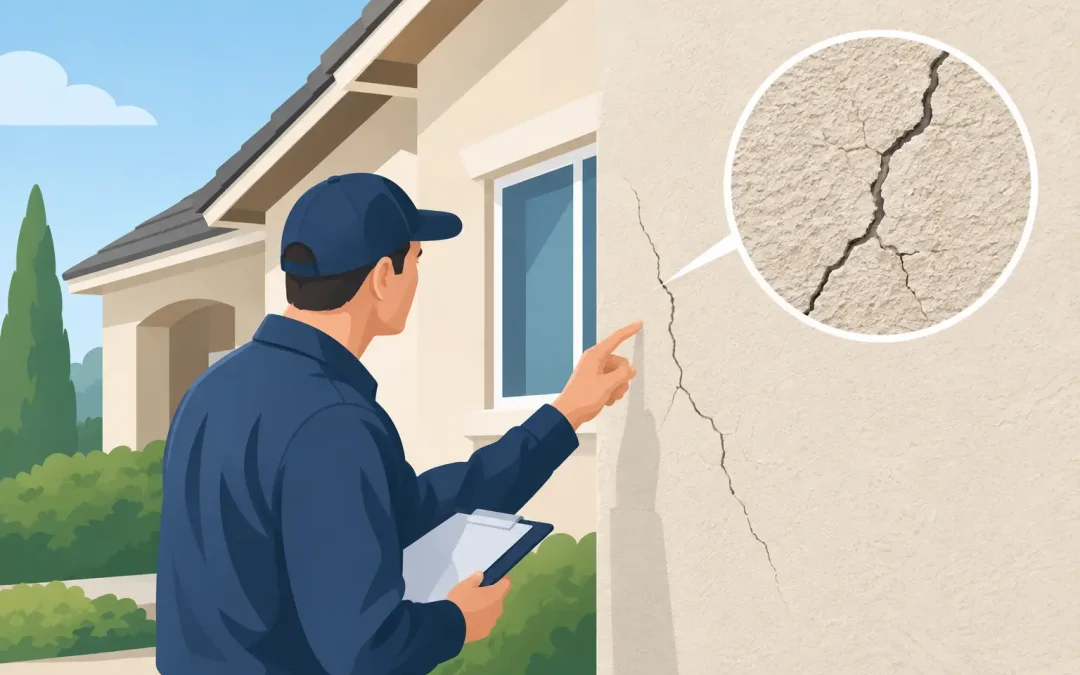
A hairline crack beside a window may be little more than normal finish movement. A widening diagonal crack paired with staining, however, can point to water intrusion or movement behind the wall. Knowing how to spot stucco cracks helps homebuyers ask better questions before contingencies expire – especially in Clark County, where intense sun, dry conditions, and big temperature swings put exterior finishes to work.
Stucco is durable, but it is not a single solid shell. It is a layered exterior system installed over framing or masonry, with flashing, sealants, control joints, and drainage details that all need to work together. A crack does not automatically mean a house has a structural problem. It does mean the exterior deserves a closer, documented look rather than a quick glance from the sidewalk.
How to Spot Stucco Cracks During a Walk-Through
Start several feet back from each exterior wall in full daylight. Looking across the wall at an angle can make cracks, waviness, patching, and color changes easier to see. Then move closer and follow each crack with your eyes. Note its location, direction, length, width, and what is nearby: windows, doors, roof edges, hose bibs, electrical penetrations, planters, or grade.
Take photos with a familiar object nearby for scale, such as a key or coin. A photo is not a diagnosis, but it preserves what you saw and makes it easier to compare conditions later. If the home is occupied, do not press hard on the stucco or attempt to probe openings. The goal during a buyer walk-through is observation, not damage.
Pay particular attention to transition points. Cracks often develop where different materials meet, where wall areas are interrupted by openings, or where a long run of stucco does not appear to have adequate control joints. These locations experience stress, and they are also common paths for water if sealants or flashing details have failed.
Hairline cracks and finish checking
Very thin, shallow cracks can occur as stucco cures or responds to seasonal movement. They may resemble fine lines, a light web pattern, or small isolated cracks in the finish coat. On a dry wall with no staining, bulging, soft areas, or separation at openings, these conditions may be largely cosmetic.
That does not mean they should be ignored. Even small cracks can need sealing or monitoring so moisture does not gain a foothold over time. The practical question is whether the cracking is isolated finish wear or evidence that the underlying stucco system is moving, holding moisture, or losing its bond to the wall.
Cracks that deserve closer attention
The shape and setting of a crack often matter more than its existence. A professional inspection should document visible conditions and identify where further evaluation or repair is appropriate. Buyers should slow down when they see any of the following:
- Diagonal cracks running from the corners of windows, doors, or garage openings.
- Cracks wider than a hairline, cracks that appear deep, or cracks with visibly separated edges.
- Long vertical or horizontal cracks extending across a large portion of a wall.
- Cracks accompanied by rust staining, dark discoloration, peeling paint, or white mineral deposits.
- Areas that look bowed, loose, unusually wavy, patched repeatedly, or different in texture or color than the surrounding wall.
A single crack may have a straightforward repair. Several patterns appearing together can change the conversation. For example, cracking around a window, failed caulk at the trim, and staining below the opening create a stronger reason to investigate water management than any one observation alone.
Where Stucco Problems Hide on Las Vegas-Area Homes
Southern Nevada is known for dry weather, but exterior water problems still happen. Roof runoff, missing or damaged flashing, poorly sealed windows, leaking plumbing, irrigation overspray, and planters built against walls can all direct moisture where it does not belong. A wall does not need frequent rain to develop a moisture-related defect.
Look below roof-to-wall intersections, beneath windows, around chimney and vent penetrations, and at the bottom edge of stucco near patios or soil. Water marks may be subtle. You might see a darkened streak, paint that looks different from the surrounding finish, bubbling, or fine white deposits left behind as moisture evaporates.
Ground clearance also matters. Stucco should not disappear into soil, mulch, decorative rock, or planter material. When the bottom of the wall is buried or continually exposed to irrigation, it becomes harder to see deterioration and easier for moisture to remain at the wall base. In desert landscaping, check whether sprinklers are regularly hitting the stucco. A green, thriving planting bed against a wall can be attractive while still creating an exterior maintenance concern.
Older repairs deserve a careful look as well. Patchwork is not automatically bad. Proper repairs are part of normal home ownership. But mismatched texture, repeated patches in the same area, or fresh paint isolated to one wall can signal a prior issue that deserves records, seller disclosure review, or further evaluation.
Do Not Confuse Stucco Cracks With Structural Diagnosis
A visible stucco crack alone cannot confirm foundation movement, framing damage, or a hidden leak. Stucco can crack for reasons ranging from normal shrinkage to installation details, thermal movement, impact damage, or substrate movement. That is why a careful inspector considers the entire pattern rather than making a serious claim from one line in the finish.
During an inspection, related clues may include uneven floors, sticking doors, interior drywall cracks, displaced trim, roof drainage defects, or separation at exterior materials. Even then, the appropriate next step depends on the evidence. A qualified stucco contractor may be needed to assess repair scope, while an engineer may be appropriate when substantial movement indicators are present.
This distinction protects buyers from two costly mistakes: dismissing a meaningful condition as “just cosmetic,” or assuming every crack requires major structural work. A detailed report should explain what was visible, include photos, and clearly separate observed conditions from recommendations for further evaluation.
Questions to Ask Before You Remove a Contingency
If stucco cracking appears in a home you are considering, ask the seller whether repairs have been made, when they were completed, and whether invoices, warranties, or photos are available. Ask whether there have been leaks at nearby windows, roof edges, plumbing fixtures, or irrigation lines. Disclosure answers should be considered alongside the visible condition, not instead of it.
Next, ask what repair is actually being proposed. “Patch and paint” may be reasonable for minor finish cracking, but it is not an answer if flashing, drainage, or substrate damage has not been addressed. A proper scope should identify the suspected cause, the area to be opened if necessary, the materials to be replaced, and how the repaired area will be sealed and finished.
For buyers, documentation turns concern into an actionable decision. Kelleher Home Inspections provides photo- and video-supported findings so clients can see the condition, understand the recommended next step, and use an organized request list when repair negotiations are appropriate. The point is not to create alarm. It is to avoid accepting vague explanations for conditions that may affect the home after closing.
When to Monitor and When to Act
Minor, isolated hairline cracking on an otherwise dry and sound-looking wall may call for routine maintenance and periodic monitoring. Photograph the area, record the date, and watch for widening, new staining, or recurring cracks after repair. This can be a reasonable approach when an inspection finds no related red flags.
Act sooner when cracks are open, widespread, actively changing, or associated with moisture evidence, loose stucco, or similar interior conditions. Obtain a qualified evaluation before closing whenever possible. Repair estimates can help determine whether you should request repairs, negotiate a credit, adjust your offer strategy, or walk away from a condition that exceeds your comfort level.
A home purchase should not require guessing what a crack means. Ask for clear evidence, a realistic repair path, and enough time to make a decision that protects your investment. The wall may only need maintenance – but buyers deserve to know when it needs more than the bare minimum.
Recent Comments