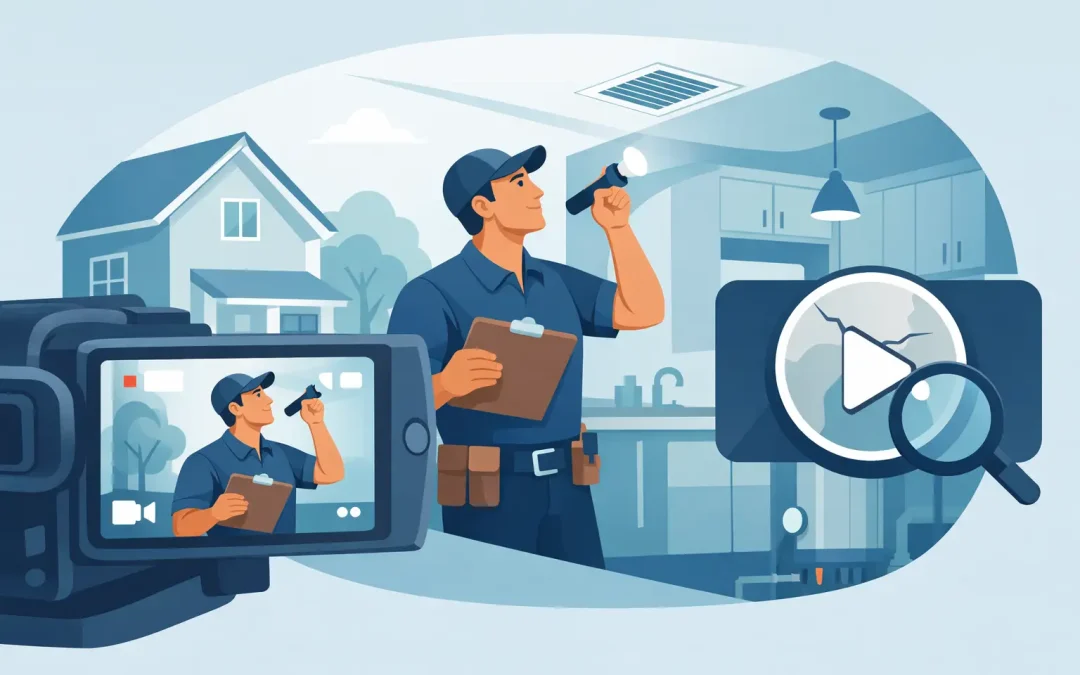
A roof flashing issue that looks minor in a photo may be much easier to understand when a short video shows loose material lifting in the wind. A plumbing concern becomes clearer when you can see a fixture drain slowly, hear water hammer in the pipes, or watch moisture appear where it should not. That is the practical value of home inspection video documentation: it gives buyers visual context for conditions that can affect their budget, negotiations, and decision to move forward.
For a buyer approaching the end of escrow, the inspection report should do more than identify defects. It should help explain what was observed, why it matters, and what needs attention first. Photos provide strong evidence for many findings. Video adds another layer when motion, sound, flow, operation, or the relationship between multiple components tells the real story.
Why Home Inspection Video Documentation Helps Buyers
Buying a home in Las Vegas, Boulder City, or Pahrump often means making decisions under a tight contract timeline. You may be relocating, coordinating a loan, selling another property, or trying to understand an unfamiliar home without a construction background. A clear visual record reduces the chance that a material finding gets lost in a phone call, misread in a report, or minimized during a rushed final walkthrough.
Video is especially useful because many home systems are not static. A still image cannot always show an air conditioning unit failing to start correctly, a garage door reversing unexpectedly, a toilet continuing to run, or an exterior gate that will not latch. A short clip can preserve the observed condition and connect it to the written recommendation in the report.
That context matters when you are discussing repairs with your real estate agent, requesting further evaluation from a qualified contractor, or deciding which issues belong in a repair addendum. Instead of trying to describe a concern from memory, you have documentation that helps keep the conversation focused on the condition observed during the inspection.
What Video Can Show Better Than Photos
Photos remain essential for documenting visible defects, component labels, damaged materials, and areas of concern. They are quick to review and easy to reference in a report. Video is not a replacement for photos or a detailed written narrative. It is a supporting tool for findings where a still image leaves important questions unanswered.
System operation and abnormal behavior
Some of the most useful inspection videos capture how a component behaves during normal operation. This may include a furnace or air handler operating, a sink being tested for drainage, a dishwasher connection showing leakage, a garage door moving through a cycle, or an electrical panel showing a condition that requires further evaluation.
In Southern Nevada, cooling performance is a particularly important concern. A video may help document unusual sounds, delayed startup, visible condensate issues, or a component that does not appear to operate as intended at the time of inspection. That does not make the inspector an HVAC technician or turn the clip into a full diagnosis. It does give the buyer and a qualified HVAC contractor a clearer starting point.
Water movement, drainage, and moisture
Water is one of the most damaging forces in a home, even in a dry climate. Video can show a drain backing up, a fixture leaking while it is in use, water flowing toward a structure, or staining that becomes more apparent as the area is examined.
This is helpful because moisture concerns can be easy to misunderstand. A photo of staining may document the location, but a video can show whether a current plumbing test produced active leakage or whether a drain appeared restricted. The written report should still distinguish between what was directly observed and what needs further investigation.
Access limitations and hard-to-explain locations
An inspection is visual and non-invasive, which means some areas are limited by accessibility, safety, stored belongings, locked spaces, insulation, or installed finishes. Video can sometimes clarify those limitations better than a sentence alone. For example, it may show why a crawlspace section could not be entered, why an attic area was inaccessible, or why a roof surface could only be viewed from a safe vantage point.
This is not an excuse to accept the bare minimum. It is transparent documentation of what could and could not be evaluated under the conditions present on inspection day. Buyers deserve to know where the inspection had a clear view and where additional access or specialized evaluation may be needed.
How to Use Videos During the Inspection Period
The most valuable video is the one you actually use. After receiving your digital report, review each clip alongside the related report finding rather than watching videos in isolation. The narrative explains the location, condition, implication, and recommended next step. The video helps make that explanation tangible.
Start with findings related to safety, active water intrusion, structural concerns, electrical defects, roofing concerns, and major system performance. Then consider the likely cost, the urgency of repair, and whether the issue should be evaluated by a licensed specialist before your contingency period ends. A loose outlet cover and an aging water heater are not necessarily equal negotiation items, even though both may appear in the report.
If you are unsure what a video demonstrates, ask your inspector. A client-focused inspection service should be prepared to explain material findings in plain language. The goal is not to make a house sound perfect or alarming. Every home has maintenance needs. The goal is to help you understand the property well enough to make a confident, informed choice.
Turn evidence into an organized request list
A report can include dozens of observations, but not every item belongs in a seller negotiation. Some are routine maintenance. Some are upgrades you may choose to make after closing. Others may be material concerns that justify repair, credit, price adjustment, or further professional evaluation.
Digital reporting tools such as HomeGauge’s Create Request List™ can help buyers and agents organize selected findings into a focused repair or project list. When a finding includes clear photos, video support where appropriate, and a concise recommendation, it is easier to communicate what is being requested without turning the negotiation into a confusing exchange of screenshots and email threads.
Keep requests specific. Ask for appropriate repair by a qualified professional when the condition warrants it, rather than demanding a vague promise to “fix everything.” Your agent can help tailor the request to the contract, the local market, and the condition of the home. In a competitive situation, a buyer may decide to request only high-priority items. In another transaction, a seller may prefer a credit rather than coordinating work before closing. It depends on timing, financing requirements, contractor availability, and your comfort with taking on the repair.
What Video Documentation Cannot Do
Video is strong supporting evidence, but it has limits. It records a visible condition at one point in time. It cannot see behind walls, predict future failures, verify permit history, determine code compliance in every circumstance, or replace an invasive inspection. It also cannot guarantee that a system will perform the same way after the inspection.
A home inspector may recommend further evaluation when a video shows unusual operation or a condition outside the scope of a general inspection. That recommendation should be taken seriously, particularly for electrical, roofing, structural, plumbing, or HVAC concerns. The right next step may be a licensed contractor, engineer, pest professional, or other qualified specialist, depending on the finding.
Buyers should also avoid treating video as a substitute for attending the inspection when possible. Being present for the buyer walkthrough gives you an opportunity to ask questions, see the home in real time, and hear which findings deserve immediate attention. Video remains useful afterward, especially when you need to revisit details with a spouse, agent, contractor, or family member who was not there.
A Better Record for a Major Purchase
An inspection report should remain useful after the contingency period, not disappear into a closing folder. The photos and videos can help you plan repairs, create a maintenance schedule, and show contractors the original condition that was observed. Months after move-in, that documentation may remind you why a particular project was recommended or help you prioritize work before a small issue becomes a larger expense.
Kelleher Home Inspections uses detailed digital reporting with photo and video support because buyers need more than a checklist. They need an above-the-minimum record of the home’s visible condition and practical guidance for what comes next. Before you commit to one of the largest purchases you may make, make sure the findings are clear enough to act on – and documented well enough to stand behind.
Recent Comments