
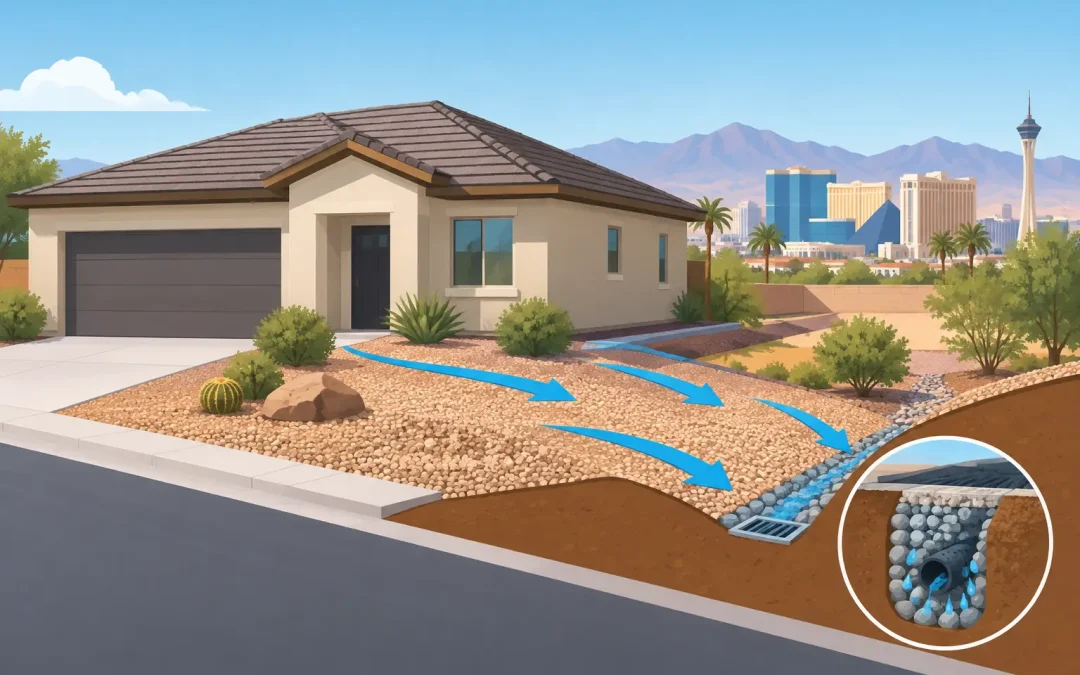
A dry Las Vegas afternoon can make a yard look problem-free, even when the next hard rain sends water toward the foundation, through a side yard, or under a patio cover. This drainage grading guide helps homebuyers recognize the visible conditions that can turn a manageable maintenance item into a costly post-closing repair.
For buyers in Las Vegas, Boulder City, Pahrump, and throughout Clark County, drainage deserves attention even in a desert climate. Rain may be infrequent, but monsoon storms can drop a large volume of water quickly. Add landscape irrigation, compacted soil, block walls, roof runoff, and neighboring lots, and water management becomes a year-round property concern.
What Drainage Grading Means at a Home
Grading is the shape and slope of the soil and hardscape around a house. Its purpose is straightforward: move surface water away from the structure and toward an appropriate drainage path. A properly graded property does not need to look dramatically sloped. It simply needs to avoid trapping or directing water against the home.
Drainage is the larger system that carries that water away. It may include the natural slope of the yard, swales, drains, gutters, downspout extensions, scuppers, splash blocks, landscape channels, and street drainage. Each component affects the others. A downspout can discharge correctly, for example, but still create a problem if it empties into a low spot beside the foundation.
A home inspection can identify visible signs of poor grading and drainage performance, but it is not a survey or civil engineering analysis. The inspector is generally evaluating accessible, observable conditions at the time of the inspection. When the site layout, settlement, retaining walls, or recurring moisture evidence raises greater concern, a drainage contractor, landscape professional, or qualified engineer may be the right next step.
Drainage Grading Guide: What Buyers Should Look For
Walk the property slowly, especially along exterior walls, side yards, patios, and the rear of the home. You are looking for the path water would take, not just whether the landscaping looks neat.
The soil and decorative rock immediately adjacent to the foundation should generally slope away rather than create a basin against the wall. Low areas next to the home can collect irrigation water and rainwater. In Southern Nevada, heavily compacted soil and caliche can make water sit on the surface longer than buyers expect, increasing the importance of positive drainage routes.
Look at hard surfaces as well. Patios, walkways, pool decks, and driveway areas should not appear to funnel water toward exterior walls, door thresholds, or garage openings. Small cracks alone are common and do not automatically indicate a major issue. However, settled concrete that has created a reverse slope, standing-water stains, or repeated patching near an entry deserves closer review.
Pay attention to roof drainage. Many homes use gutters and downspouts, while others rely on scuppers or roof edges that release water onto the ground. The key question is where the water lands. Concentrated roof runoff should not discharge immediately beside the foundation, onto a walkway that drains back toward the house, or into a narrow side yard with no clear outlet.
The following visible conditions are worth discussing with your inspector or asking the seller to clarify:
- Soil, gravel, or planter beds that slope toward the foundation
- Depressed areas, erosion channels, or staining that suggest standing water
- Downspouts that terminate close to exterior walls or at low points
- Patio or walkway surfaces pitched toward doors, walls, or the garage
- Blocked, damaged, or poorly maintained area drains and swales
- Water damage, peeling finishes, mineral deposits, or deterioration at the base of exterior walls
One sign is not always a deal-breaker. Several signs that point to the same water-management problem are more meaningful. For example, a low side yard, a roof discharge at that location, and moisture staining near the wall create a stronger case for correction than any one condition by itself.
Do Not Forget Irrigation
In Clark County, irrigation can expose drainage weaknesses even when it has not rained for months. Check whether drip lines, sprinkler heads, or landscape basins are installed directly against the home. Overspray against stucco, frequent pooling around planters, and leaking irrigation components can introduce repeated moisture where it does not belong.
This is especially relevant around mature landscaping. Trees and shrubs may have been added long after construction, changing the original slope or creating raised planter areas that hold water. The landscaping may look attractive while concealing soil that is too high against the exterior finish or directing runoff toward the structure.
Why Poor Grading Can Matter During a Purchase
Water that repeatedly collects near a house can contribute to soil movement, surface erosion, damaged finishes, moisture intrusion, pest-conducive conditions, and deterioration of exterior materials. It can also make routine maintenance harder. A buyer who inherits a drainage issue may need to regrade soil, modify landscaping, extend downspouts, repair hardscape, add drains, or address related damage.
The scope can vary widely. Sometimes the fix is a modest adjustment to a downspout extension or irrigation schedule. Other times, correcting drainage involves removing concrete, rebuilding a patio area, changing landscape elevations, or coordinating work with a neighboring property. The visible condition, access, lot configuration, and local drainage requirements all affect the cost and complexity.
A property with a pool deserves additional attention. Pool decks, equipment pads, and surrounding hardscape can limit where water can travel. Buyers should look for drainage paths that protect both the home and the pool area without directing runoff toward neighboring lots. Water issues around pools can involve deck settlement, drainage channels, and equipment-area conditions that are not solved by adding gravel alone.
Questions to Ask Before the End of Escrow
When an inspection report identifies grading or drainage concerns, the goal is not to demand a vague promise that the issue will be “fixed.” Ask for information that helps define the condition and the proposed correction.
Start with practical questions: Has water entered the garage or home? Does the area pond after rain or during irrigation? Have prior repairs been made? Are there invoices, warranties, photographs, or drainage plans? If the seller proposes a repair, ask what contractor will perform it and what specific result the work is intended to achieve.
For material concerns, obtain a qualified evaluation before relying on a repair credit. A credit can be useful, but it shifts the responsibility for diagnosing and completing the work to the buyer after closing. That may be appropriate for a straightforward improvement, but less so when the source of water or the extent of damage is uncertain.
Your real estate agent can help organize requests based on the inspection findings. Photo- and video-supported documentation makes it easier to keep the discussion focused on observable conditions, repair priorities, and the next appropriate professional rather than assumptions.
What a Home Inspection Can and Cannot Tell You
A detail-oriented inspection can identify visible negative grading, apparent drainage limitations, roof runoff discharge concerns, site moisture evidence, and damage that may be related to water exposure. It can also help separate immediate concerns from items that should be monitored or improved as part of regular ownership.
It cannot guarantee how a property will perform in every storm. Inspection conditions matter. A dry-day inspection may not reveal how water moves during a heavy monsoon event, and concealed underground drainage components may not be fully visible. That is why buyer questions, seller disclosures, and specialist input can be just as important as what is visible during the appointment.
Kelleher Home Inspections sets the bar high by documenting material visible conditions clearly, helping buyers understand what the findings mean before they finalize closing terms. A clear report gives you a practical starting point for repair discussions, further evaluation, and future maintenance planning.
Before you commit to a home, picture the water route from roof to ground to street. If that route ends at the foundation, a door threshold, or a low enclosed side yard, get answers while you still have options.
Recent Comments